
Expense control is a financial process that directly impacts profitability and operational efficiency. For years, companies have managed invoices, receipts and reimbursements with spreadsheets, emails and manual approvals. This approach works when volumes are low, but it becomes fragile as the organization grows. Modern expense control software brings order, traceability and analytical capacity. It also provides an ideal scenario for applying automation, artificial intelligence and innovation methodologies that turn a traditionally reactive area into a source of competitive advantage.
The first major step is workflow automation. An expense control solution can record each request, check whether the line item fits the budget, apply approval policies and generate the corresponding accounting entries. By removing repetitive tasks, the finance team can spend more time on analytical and strategic control activities. Automation does not mean deploying a generic tool; for the process to fit each company's reality, it is better to opt for custom software.
Q2BSTUDIO, a software and technology development company, designs expense control solutions adapted to each client's business processes. Instead of imposing closed logic, it builds modules that respect departmental structures, approval levels and specific accounting rules. The result is a flexible, scalable system ready to grow with the organization and connect with existing management systems.
Artificial intelligence raises the potential of expense control even further. Document recognition models can extract information from invoices or tickets with high accuracy. AI automatically classifies expenses by category, project and cost center, reducing data entry errors and speeding up the approval cycle. In addition, AI agents can interact with employees in natural language: answer policy questions, request clarification before a request is submitted and proactively notify about incidents.
The use of AI agents in expense control is not a futuristic vision. In practice, an agent can review a suspicious expense, compare it with internal policies and escalate it to a manager if it detects an anomaly. Thanks to AI, the system learns from resolved cases and continuously improves the accuracy of its decisions. This intelligent automation capability turns expense control into an excellent testing ground for innovating financial processes.
Process automation does not end inside expense software. To deliver real value, it must connect with the rest of the ecosystem: purchase orders, contracts, ERP and billing tools. Through API integrations and events, the creation of an expense can trigger updates in other systems without manual intervention. Moreover, combining business rules and AI models enables adaptive flows: if a department exceeds its budget, the request can be automatically redirected to an approval committee. This systemic view turns expense control into a central node of financial operations, not a simple isolated record.
Another technological pillar is the cloud. Hosting expense control software on AWS or Azure offers important benefits: elastic scalability, high availability, easier integration and lower infrastructure costs. Companies can access data from any location, with advanced authentication mechanisms and automatic backups. The cloud architecture also simplifies communication with other business applications, such as ERP, CRM or business intelligence platforms.
Security is a critical element in any financial solution. Expense control software handles sensitive data about employees, suppliers and bank accounts. Therefore, cybersecurity must be present from the design phase: encryption of data in transit and at rest, role-based access management, event auditing and protection against fraud. Companies should also test their systems through penetration testing to spot vulnerabilities before they are exploited.
Q2BSTUDIO integrates these principles into its developments. The company understands that expense control cannot be an isolated module; it must coexist with corporate security systems and meet industry standards. By combining good cybersecurity practices with software development, automation does not put confidential information at risk.
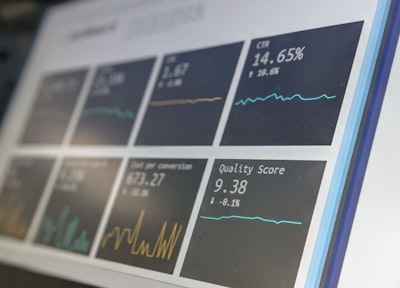
When expense data is clean and centralized, it can be turned into business information. This is where business intelligence comes into play. A dashboard connected to expense software lets you visualize in real time spending by department, project or supplier. With tools such as Power BI, financial managers can identify trends, budget deviations and savings opportunities that would otherwise go unnoticed.
The connection between expense control software and business intelligence and Power BI is a natural step for any mature organization. Instead of exporting files, the system can feed a unified data model that combines financial, operational and commercial information. Q2BSTUDIO develops these data models and connects them to the existing ecosystem, making it easier for finance teams to adopt advanced analytics.
The combined effect of automation, AI, cloud and business intelligence translates into a more agile financial operation. Errors decrease, reimbursement times shorten and employees perceive a fairer, more transparent process. But perhaps the most valuable impact is innovation capacity: when expense control works properly, the finance team can focus on strategic initiatives, predictive analysis and cost optimization models.
Innovation is also supported by a data culture. With a well-designed expense control system, every spending decision generates evidence that can be reviewed. That evidence allows experimenting with new policies, testing changes in approval limits or evaluating the viability of new projects. The software stops being a simple container of transactions and becomes a platform for continuous learning.
For this to become a reality, technology must serve the business. Q2BSTUDIO supports companies from the definition of the expense model to go-live, integrating AI tools, cloud services, security and analytics. Its agile approach makes it possible to prioritize features and deliver value in each iteration, with a focus on measurable results.
In conclusion, expense control software drives automation and business innovation when it is conceived as part of an integral digital strategy. Technology alone does not transform; it needs clear processes, performance metrics and a continuous improvement vision. Applying technologies such as AI, AI agents, AWS/Azure cloud, cybersecurity and Power BI turns an administrative process into a competitive advantage. If your company wants to transform expense management with a tailored solution, partnering with a technology provider like Q2BSTUDIO is the right path to achieve sustainable change.


