
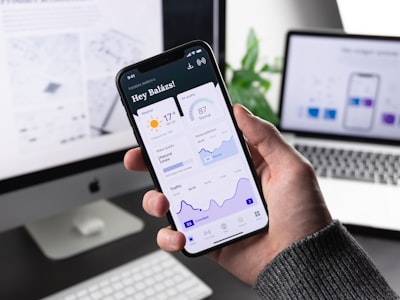
This success story describes how Q2BSTUDIO, a company specialized in software development and technology, transformed the booking management of a Spanish company through a custom web application. The project had a clear objective: to replace improvisation and spreadsheets with a system designed for real operations, capable of adapting to the particularities of a booking-focused business. In just under twelve weeks, the company achieved a unified view, fewer manual tasks, and a more productive operations team.
The client company belonged to a sector where precision is critical: hotels, experiences, and appointment-based services. Every day, agents received dozens of requests through different channels. Each request had to be checked against real availability, validate prices, confirm the booking, and send a notification. A significant part of that information lived in emails and Excel spreadsheets that each agent interpreted in their own way. The result was an operation vulnerable to double-booking errors, last-minute no-shows, and frustrated customers.
Q2BSTUDIO's first step was to understand the entire process before writing a single line of code. For two weeks, the consultants worked alongside the operations team, mapped every task, identified bottlenecks, and defined the indicators that would measure success. That discovery phase revealed a surprising fact: the team spent almost 40% of their workday on manual activities that added no value, such as copying data between systems or filling out templates. That was the basis of the investment case.
The chosen solution was custom software, that is, a web application built specifically for the client's workflow. Instead of adapting the business to a standard tool, the application was designed to fit the business rules: calendar-based availability, dynamic rates, customer preferences, and cancellation policies. The development was approached with a modular architecture, so that each function could evolve independently. For the Q2BSTUDIO team, digital transformation is not about installing technology, but about creating a system that fits the company's operational culture.
The technological infrastructure was deployed on the Azure cloud, with complementary services on AWS for auxiliary data processing. This cloud architecture ensured availability, scalability, and fault recovery without the need to invest in local servers. Cybersecurity measures were included from the start: data encryption, multi-factor authentication, role-based access control, and audit logging. The processing of personal data, especially relevant in a booking business, complied with European regulations and the client's internal security protocols.
One of the differentiating components was the use of artificial intelligence integrated into the workflow. The application incorporates AI agents that analyze incoming requests, extract relevant data, and propose the most likely action. For example, an email from a customer with a date change request is automatically interpreted, availability is checked, and a response suggestion is generated. The final decision always requires human oversight, which increases confidence and reduces the risk of errors. That combination of automation and artificial intelligence in the workplace was key to achieving measurable results from the first month.
Another pillar was integration with existing systems. The new application did not replace the ERP or CRM, but connected to them via APIs, avoiding operational disruptions and leveraging already stored information. Additionally, a set of indicators was designed to feed a Power BI dashboard. Management could see in real time the occupancy of resources, the number of pending bookings, expected revenue, and average response time. That visibility was not possible with the previous system, where several spreadsheets had to be consolidated to get an approximate picture of the situation.
The implementation phase was organized in short cycles with frequent deliveries. First, a basic version of the system with the most critical flows was launched and tested with a pilot group. During those weeks, the Q2BSTUDIO team collected feedback from agents and adjusted usability details. Then the deployment was expanded to the rest of the team, and the more advanced modules were progressively activated: automatic alerts, smart reminders, and the management portal for administrative staff. This gradual approach reduced the risk of disruption and helped the team internalize the new way of working.
The project results exceeded the client's expectations. The manual tasks that consumed almost half of the team's time were drastically reduced. Booking confirmation time went from hours to minutes. Information stopped being duplicated in separate files and began to flow between systems. The combination of automation, unified databases, and well-defined processes also generated an improvement in customer service quality, with fewer incidents and greater clarity in communication.
From an economic standpoint, the client managed to save on administrative hours and billing errors. In the first months, the operational improvement translated into a significant cost reduction and allowed the team to be reassigned to higher-value tasks, such as premium customer care or expanding the service offering. The investment in the custom application was amortized in less than a year, thanks to improved efficiency and increased management capacity without the need to hire more staff.
For Q2BSTUDIO, this project confirms that the value of custom software lies in the precision with which it adapts to the reality of the business. It is not about implementing technology for technology's sake, but about solving concrete problems: eliminating repetitive work, providing visibility, connecting systems, and using data to make better decisions. The combination of cloud, cybersecurity, artificial intelligence, and business intelligence is especially powerful in service- and booking-oriented sectors, where every minute of delay or every availability error has a direct impact on the customer experience.
The client's management particularly values the autonomy gained by the operations team. With the new application, agents can check availability, register bookings, manage changes, and communicate with customers in a single interface. Middle managers have access to dashboards with reliable data, and senior management can anticipate demand peaks and adjust resources more quickly. That transformation would not have been possible with a standard solution without deep customization.
This success story also leaves some important lessons. The first is that defining indicators before development makes the difference between a technical project and a business initiative. The second is that integrations are as important as the application itself: connecting the ERP, CRM, and communication tools was what made it possible to eliminate information silos. The third is that adoption is not achieved by obligation, but with user-centered design and the support of the agents themselves during the implementation process.
Q2BSTUDIO offers exactly that: custom web application development, applied artificial intelligence, process automation, cloud platforms on Azure and AWS, cybersecurity, and Power BI dashboards. Their team accompanies each client through all phases, from the first discovery session to production deployment and system evolution. For booking service companies looking to leave spreadsheets behind and gain control over their operations, a custom solution is the most direct path.
If your company needs to modernize booking management, buying a generic tool is not enough. It is necessary to understand the process, design a tailored solution, and protect data from the start. Q2BSTUDIO can help you achieve results in weeks, not years, with a practical and measurable approach. The technology is ready; the next step is to shape your own solution.

