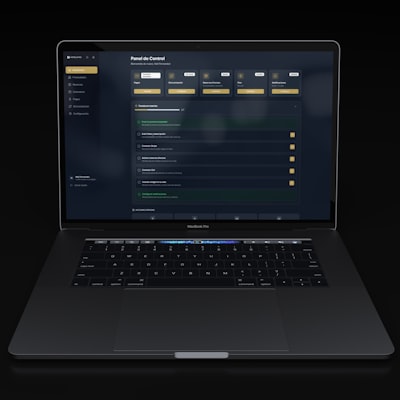
In the digital age, automation has become the engine driving business competitiveness. When we talk about automation software, we refer to solutions that transform repetitive and manual tasks into intelligent processes, reducing errors, speeding up cycles, and freeing talent for higher-value activities.
The challenge is not just to implement a tool, but to design an ecosystem where artificial intelligence (AI), data analytics, and cloud infrastructure integrate seamlessly. At Q2BSTUDIO, our experience in developing custom software allows us to create solutions that adapt to each client’s existing architecture, whether it’s an ERP, CRM or legacy systems.
A first essential step is to identify the processes with the greatest operational impact. For example, billing cycles, automatic lead assignment or monthly close are often ideal candidates. Once selected, a workflow is designed that leverages AI to predict behaviors, detect anomalies and optimize decisions in real time.
Integration with the cloud, whether AWS or Azure, is another fundamental pillar. By migrating critical processes to the cloud, companies gain instant scalability and geographic redundancy. At Q2BSTUDIO, we offer AWS/Azure cloud services that ensure a resilient architecture, with high availability and compliance with international standards.
Security cannot be left in second place. Automation exposes sensitive data to new access paths, so robust controls are essential. Our approach to cybersecurity includes penetration testing, vulnerability analysis and Zero Trust policy implementation. Thus, each automated process runs with maximum confidentiality and traceability.
Data analytics is the heart that feeds AI. With tools like Power BI, companies can turn operational metrics into interactive dashboards revealing trends and opportunities. At Q2BSTUDIO, we develop BI / Power BI solutions that connect directly to automation flows, providing real-time insights and enabling dynamic adjustments.
AI not only automates tasks but also adds predictive value. NLP-based conversational agents can handle customer queries, while machine learning algorithms optimize logistics routes or forecast demand. In practice, this translates into reduced response times and a significant increase in customer satisfaction.
For companies looking to scale, modular automation is key. Each module is designed as an independent microservice, allowing new functionalities to be added without affecting the core system. This architecture facilitates integration with future systems and ensures that growth does not generate proportional costs.
A recent success story involves a distribution chain needing to optimize inventory and logistics. We implemented an automated flow that, using AI, adjusted stock levels in real time and coordinated delivery with optimal routes. The result was a 30% reduction in storage costs and a 15% increase in delivery speed.
Adopting intelligent software also opens doors to new business models. For example, companies can offer their processes as services (BPMaaS), monetizing the efficiency they have achieved. At Q2BSTUDIO, we advise clients on defining monetization strategies and creating secure APIs that allow process sharing with partners.
The return on investment (ROI) is measured not only in financial savings but also in human time and quality. A well-designed automation reduces error margins, improves traceability, and frees employees for creative tasks. This cultural shift is as valuable as any accounting figure.
To start, we recommend a process audit that identifies bottlenecks and automation opportunities. At Q2BSTUDIO, we use agile methodologies to prototype solutions quickly and validate their impact before full implementation.
In conclusion, automating your business with intelligent software is not a passing trend; it’s an integrated strategy combining AI, cloud, cybersecurity and BI. With the support of a tech partner like Q2BSTUDIO, companies can transform operations, gain competitiveness and open new growth avenues.