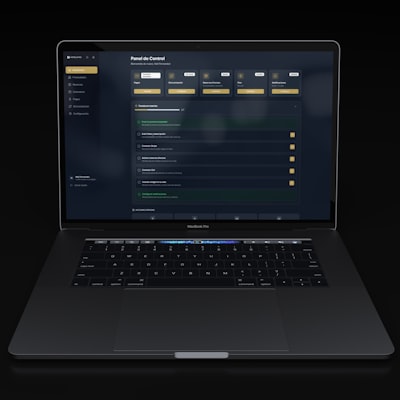
In today’s business environment, automation has become a decisive factor for competitiveness and operational efficiency. When we talk about software to automate your business, we’re not just referring to replacing manual tasks with machines, but creating a digital ecosystem that enables continuous flows, data-driven decisions, and a substantial reduction in human error.
Choosing the right tool requires adopting both technical and business perspectives that cover current needs and future growth projections. Automation is not an isolated project; it must integrate with the existing architecture, which often includes ERP, CRM, and legacy systems. In this sense, custom software development emerges as the most flexible solution, allowing you to design specific processes and adapt to future changes without relying on generic solutions.
A critical point is the choice of provider. Experience in automation projects, especially those combining AI and BI, is essential. Teams that have implemented workflows with AI agents and Power BI dashboards demonstrate proven ability to translate complex data into operational decisions.
Cloud architecture also plays a central role. Migrating processes to the cloud, whether on AWS or Azure, offers instant scalability and resilience. Cloud services allow applications to automatically adjust to demand, reducing costs and improving response times.
Cybersecurity cannot be left secondary. Every automated process exposes critical data; therefore, the provider must have robust certifications and security practices. Integrating access controls, encryption, and penetration testing ensures data integrity and confidentiality.
When evaluating providers, consider the following criteria:
1. Experience and case studies: Review portfolios that include similar projects in your sector.
2. Technical capabilities: Certifications in programming languages, low-code frameworks, and AI tools.
3. Quality and reliability: QA processes, agile methodologies, and performance metrics.
4. Communication: Transparency in project management and support channels.
5. Total value: Not just the initial price, but also maintenance and upgrade costs.
6. Scalability: Ability to grow with your business and adapt to new regulations.
7. Maintenance: Post-implementation support and continuity plans.
8. Industry knowledge: Experience in your industry provides valuable insights.
Q2BSTUDIO excels in each of these areas. Their team combines software engineering with deep business knowledge, resulting in solutions that not only automate processes but also generate added value through advanced analytics and AI-driven decisions.
In conclusion, choosing the best software to automate your business involves more than selecting a tool; it’s about building a technology partner aligned with your strategic vision. By integrating custom software, cloud services, AI and BI, and reinforcing security with cybersecurity practices, companies can transform their operations into engines of innovation and sustainable growth.