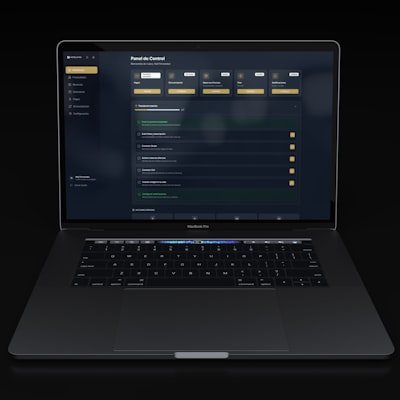
Reliability in business automation is not merely a promise that software will work; it is a strategic commitment to operational continuity, service quality and user trust. When an organization decides to automate critical processes—from invoicing and lead assignment to accounting close or interdepartmental workflows—the software that supports it must be robust, scalable and secure. At Q2BSTUDIO we understand that reliability is not an isolated attribute but the result of well‑designed architecture, rigorous testing and continuous monitoring.
In practice, ensuring reliability starts with a deep assessment of the processes to be automated. It is not enough to identify repetitive tasks; it is essential to understand data flows, integration points and external dependencies. Once the scope is defined, Q2BSTUDIO employs agile and DevOps methodologies to build custom solutions that integrate seamlessly with ERP, CRM and other existing systems. This modular approach facilitates updating individual components without disrupting service.
A high‑performance architecture is the backbone of any reliable system. Q2BSTUDIO uses high‑availability clusters with automatic failover, load balancing across zones and regions, and cloud deployments (AWS or Azure) that guarantee geographic redundancy. Additionally, we implement process automation practices that enable parallel task orchestration, reducing bottlenecks and improving response time.
Proactive monitoring is another essential pillar. Instead of reacting to failures, Q2BSTUDIO configures synthetic and real‑user monitoring dashboards that alert before a problem affects end users. These metrics include latency, availability and error rate, allowing support teams to anticipate and mitigate incidents.
Resilience is tested through chaos engineering exercises. By introducing controlled failures—such as network disconnections, service outages or CPU overloads—we validate the system’s ability to recover without data loss or prolonged downtime. This approach not only strengthens infrastructure but also reinforces a “build‑run‑learn” culture within the team.
Performance is measured before every significant release. Q2BSTUDIO runs load and stress tests that simulate real‑world scenarios, ensuring the application maintains its SLA even during traffic spikes. Results are documented and used to optimize environment configuration, guaranteeing a consistent user experience.
Security is inseparable from reliability. A system that fails due to cybersecurity breaches loses credibility and may face regulatory penalties. That’s why Q2BSTUDIO integrates security practices from the design phase: multi‑factor authentication, encryption in transit and at rest, static and dynamic code audits, and regular penetration testing. Moreover, the cloud architecture (AWS or Azure) leverages managed security services and granular access policies.
Artificial Intelligence (AI) adds an extra layer of reliability by predicting anomalies and optimizing flows. AI agents can detect unusual behavior patterns, alert to potential failures and suggest automatic adjustments. Q2BSTUDIO develops AI agents that integrate with automation systems, enhancing resilience and reducing downtime.
Business Intelligence (BI) with tools like Power BI allows managers to visualize automation performance in real time. Dashboards show key metrics—error rate, mean time to resolution and ROI—facilitating data‑driven decisions. Q2BSTUDIO offers consulting to design and deploy BI solutions that complement automation.
In short, guaranteeing reliability in business automation is achieved through a combination of resilient architecture, proactive monitoring, exhaustive testing and comprehensive security. Q2BSTUDIO blends these elements with its expertise in custom software development, AI and cloud services to deliver solutions that not only automate processes but also ensure continuity, performance and trust.