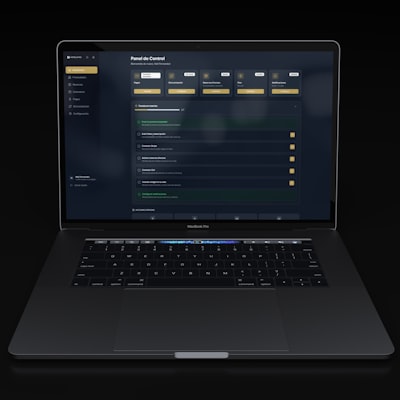
The secure remote access to your business automation software is a fundamental pillar in the digital age, where operations extend beyond the physical boundaries of an office. The ability to manage critical processes from any location, always ensuring data integrity and confidentiality, has become an essential requirement for companies seeking agility and competitiveness. In this context, the combination of technologies such as advanced cybersecurity, cloud computing, and artificial intelligence (AI) solutions allows designing hybrid work environments that not only protect information but also optimize workflows.
To understand how to achieve secure remote access, it is first necessary to identify the inherent risks of external connectivity. Phishing attacks, vulnerabilities in mobile devices, and use of public networks are just a few examples that can compromise system integrity. The response to these challenges lies in implementing a Zero Trust architecture, where each access request is independently verified and the principle of least privilege is applied. This approach ensures that even if an attacker penetrates a security layer, they cannot move laterally within the environment.
A robust solution starts with multi‑factor authentication (MFA) and identity‑based token usage. By combining passwords with biometrics or OTP codes, the probability of unauthorized access is drastically reduced. Additionally, identity proxy services allow real‑time traffic inspection and filtering without relying on traditional VPNs, simplifying administration and improving user experience. Integration with identity management (IAM) platforms facilitates the application of dynamic policies based on context, such as geographic location or device type.
Cloud computing, especially AWS and Azure platforms, offers native tools to strengthen remote access security. With services like Amazon Cognito or Azure AD B2C, companies can delegate identity management and access control to providers that meet international standards. Moreover, virtual private cloud (VPC) services and private subnets isolate critical resources while security groups and access control lists (ACLs) define precise rules for inbound and outbound traffic. Combining these resources with encryption at rest and in transit ensures that sensitive data remains protected throughout its lifecycle.
Integrating artificial intelligence into automation processes not only improves operational efficiency but also enhances security. AI agents can monitor anomalous behavior patterns, detect intrusion attempts, and automatically respond to emerging threats. When combined with Business Intelligence (BI) tools like Power BI, organizations can generate real‑time dashboards that display security and performance metrics. This allows IT teams to anticipate problems before they become critical incidents.
At Q2BSTUDIO, we specialize in developing custom software solutions that integrate all these technologies. Our approach focuses on creating cross‑platform applications that work seamlessly in both local and cloud environments. Custom software allows tailoring workflows to each business’s specific needs, ensuring that automation aligns with internal processes. We also offer AWS/Azure cloud services to ensure that infrastructure is scalable, secure, and compliant with current regulations.
Cybersecurity is another critical component we address with pentesting and continuous analysis solutions. Cybersecurity not only protects against external threats but also ensures the integrity of internal data. Our experts conduct regular penetration tests and audits to identify vulnerabilities before they can be exploited. By combining these practices with automation, companies can reduce incident response time and improve their security posture.
To maximize the value of automation, it is essential to integrate BI tools that allow visualization and analysis of data generated by automated processes. With BI / Power BI, organizations can create dynamic reports that show key performance indicators (KPIs) and operational trends. This visibility facilitates data‑driven decision making, which in turn drives efficiency and reduces costs.
Finally, adopting AI agents in the automated workflow opens new possibilities. From virtual assistants that manage tickets to predictive algorithms that optimize resource allocation, AI can transform how businesses operate. At Q2BSTUDIO, we implement AI solutions that integrate seamlessly with existing infrastructure, ensuring a smooth and interruption‑free transition.
In conclusion, secure remote access to your business automation software is not just a technical issue; it is a strategic component that drives resilience, productivity, and innovation. By combining advanced cybersecurity, cloud computing, BI, and AI, organizations can create flexible work environments that protect information and optimize processes. With the support of a technology partner like Q2BSTUDIO, you can design and implement customized solutions that fit your needs and position you for future success.