In today’s highly competitive business environment, speed and precision in internal processes have become decisive factors for success. When an organization automates repetitive and manual tasks, it not only reduces the likelihood of human error but also frees valuable resources that can be redirected toward higher‑value activities. This article explores how financial results can materialize quickly by implementing automation solutions, and why Q2BSTUDIO is positioned as the ideal partner to drive this transformation.
Automation is not a passing trend; it’s the natural evolution of enterprise systems that aim to optimize workflow. From introducing an electronic invoicing module to integrating real‑time approval flows, every improvement translates into a tangible cost reduction and increased operational efficiency. Financial benefits typically appear in distinct stages, but the first impact is often immediate when manual tasks that consume hours of work are eliminated.
To understand the return on investment (ROI) in automation, it’s essential to break down results into three time horizons: short‑term, medium‑term, and long‑term. In the short term, automating processes such as report generation or incident management usually yields savings in less than three months. The time saved on repetitive tasks translates directly into lower labor costs and higher productivity.
In the medium term, benefits become more strategic. Real‑time data availability and quick responsiveness to market changes allow companies to adjust their commercial strategies with greater agility. This level of flexibility is reflected in increased revenue, as data‑driven decisions often generate sales opportunities and price optimisation.
Finally, in the long term, automation becomes a continuous innovation engine. By freeing human and technical resources, organisations can invest in new initiatives such as AI‑driven demand forecasting or developing IA agents that manage customer interactions. This perpetual improvement cycle strengthens competitive position and consolidates financial results over time.
Q2BSTUDIO, as a software and technology development company, offers an integrated approach that combines custom‑software creation with best practices in cybersecurity, cloud and business intelligence. Their methodology is based on identifying critical processes that can benefit from automation, followed by agile design and development that ensures seamless integration with existing systems.
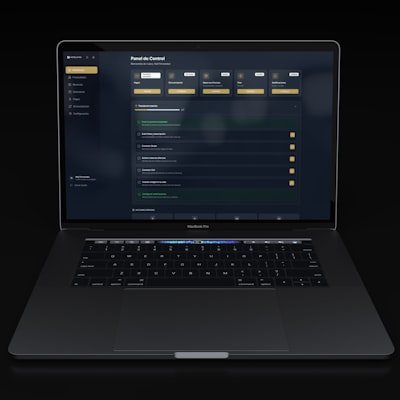
One of the key advantages of working with Q2BSTUDIO is their expertise in implementing process automation. The team uses low‑code tools and robust platforms to accelerate delivery time without compromising quality. Additionally, by integrating BI and Power BI, organisations gain interactive dashboards that allow real‑time KPI monitoring and informed decision‑making.
Security is also a fundamental pillar in Q2BSTUDIO’s offering. With specialised services in cybersecurity and pentesting, new applications are guaranteed not to introduce vulnerabilities. Protection of sensitive data and compliance with regulations such as GDPR become a guarantee for clients.
Regarding infrastructure, Q2BSTUDIO facilitates migration and operation in cloud environments such as AWS or Azure. The cloud solution allows scaling resources according to demand, optimising costs and reducing downtime.
The integration of AI is another strategic component. With Q2BSTUDIO’s artificial intelligence, companies can automate cognitive tasks such as sentiment analysis on social media or automatic ticket classification. AI agents can also manage customer conversations, reducing the load on support teams.
To illustrate financial impact, consider a typical case: a logistics company that automates its route‑assignment process. Before implementation, the team spent 40 hours a week on this manual task. With an automated solution, time drops to 5 hours weekly, saving 35 hours per week. If the average hourly cost is €25, monthly savings amount to €3,500. This benefit materialises in less than a month, and ROI becomes evident within the first three months.
Another example is automating invoice generation. Eliminating manual processes reduces billing errors and disputes with clients. The result is improved liquidity, as payments are received faster and accounts receivable shrink.
To maximise results, it’s crucial to establish clear metrics from the outset. Performance indicators should include both operational metrics (cycle time, error count) and financial ones (costs reduced, revenue increased). Tracing these indicators allows strategy adjustments and ensures that financial objectives are met.
In conclusion, automating business processes not only improves operational efficiency; it also generates tangible and rapid financial results. By partnering with a partner like Q2BSTUDIO, organisations can accelerate digital transformation, benefiting from custom software solutions, secure cloud integration and advanced AI capabilities. The combination of these elements creates an ecosystem where processes are optimised, security is strengthened and ROI accelerates.