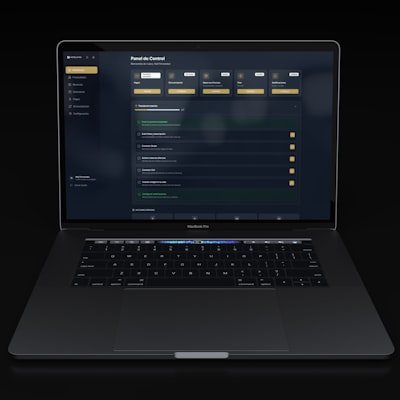
The digital transformation is not just a trend, but a strategic imperative for any organization that wants to stay competitive in today’s market. One of the fundamental pillars of this transformation is internal automation, which allows processes to be optimized, errors reduced, and talent freed for higher value tasks. In this article we will explore the essential steps a company must take to prepare internally before launching an automation project, with emphasis on the technical and business perspective offered by Q2BSTUDIO as a leader in custom software development.
1. Define a clear vision aligned with business objectives
Before selecting any tool or platform, it is crucial that senior management establishes a shared vision of what is expected to be achieved with automation. This vision must translate into measurable objectives, such as reducing billing cycle time by 30 %, increasing the accuracy of financial reports or improving customer satisfaction through faster responses. With concrete goals, the project team can prioritize processes and justify investment in technology solutions.2. Identify processes suitable for automation
The next step is to map existing workflows and assess their operational maturity. It is recommended to start with processes that have high repetitiveness, high volume and a risk of human error. Typical examples include invoice generation, automatic lead assignment or monthly close. Q2BSTUDIO facilitates this phase through business analysis and collaborative workshops that identify processes with the highest return on investment.3. Establish a governance framework and data ownership
Automation depends heavily on the quality of the data that feeds the applications. Therefore, it is essential to define clear roles for data management: who is responsible for cleaning, updating and securing it. Additionally, a governance committee should be created to oversee the implementation of new solutions, ensure regulatory compliance and maintain consistency between ERP, CRM and other platforms.4. Prepare the technology infrastructure
To support automated processes, organizations must have a robust IT architecture. Adopting cloud solutions such as AWS or Azure offers scalability and flexibility. Q2BSTUDIO has a specialized service in AWS/Azure cloud that allows migrating and hosting custom applications with high availability and compliance with international standards.5. Integrate cybersecurity from the start
6. Train internal talent and foster a culture of change
Technology is only an enabler; success depends on human capital. It is recommended to create cross‑functional teams that include business analysts, developers and user experience specialists. Additionally, it is vital to design continuous training programs that teach employees how to interact with new tools and make the most of their capabilities.7. Implement an AI and advanced analytics strategy
Artificial intelligence can enhance automation by providing conversational agents, predictive analysis and decision optimization. Q2BSTUDIO develops AI agents that integrate with existing systems, improving operational efficiency and providing actionable insights. Likewise, incorporating Business Intelligence with Power BI allows visualizing key metrics in real time.8. Continuously measure and optimize results
Once solutions are deployed, it is essential to establish performance indicators (KPIs) that measure impact in real time. Continuous feedback allows adjusting flows, correcting deviations and scaling automation to new processes. Q2BSTUDIO offers custom dashboards that facilitate monitoring and data‑driven decision making.9. Scale with a modular and reusable architecture
To avoid duplication of effort, applications should be designed with reusable components and open APIs. This makes it easier to expand into new modules such as inventory management or customer support without requiring complete redesigns. Q2BSTUDIO’s custom development philosophy ensures each solution is modular and adaptable.10. Keep flexibility in face of market evolution
The business environment changes rapidly. Therefore, automation solutions must be flexible enough to incorporate new regulations, emerging technologies or changes in corporate strategy. Adopting agile methodologies and using low‑code platforms allows rapid iteration without compromising quality.In conclusion, preparing internally to automate your business is a comprehensive process that covers strategic vision, data governance, technology infrastructure, cybersecurity, human talent and performance metrics. By following these steps and partnering with a tech partner like Q2BSTUDIO, organizations can implement custom software and automation solutions that not only improve operational efficiency but also drive innovation and sustainable growth.