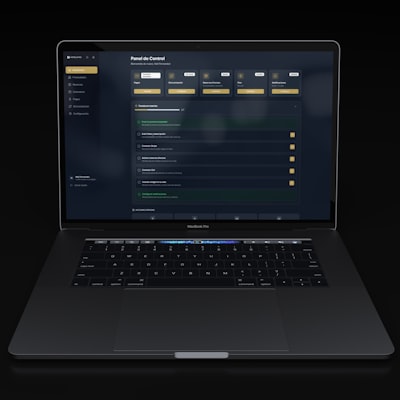
The process automation has become a fundamental pillar for companies aiming to stay competitive in today’s environment. It is not merely about replacing manual tasks with machines, but integrating intelligent technology that allows organizations to optimize resources, reduce errors, and accelerate decision-making. In this context, custom software emerges as the most flexible solution aligned with each business’s specific needs.
Over recent years, the convergence of artificial intelligence (AI), cybersecurity, and the cloud has redefined what automation means. AI not only analyzes real-time data but also learns from operational patterns to predict and prevent failures before they occur. Cybersecurity, on the other hand, ensures that automated flows do not become vulnerabilities. And the cloud—whether AWS or Azure—provides the scalability and resilience needed to support critical processes without interruptions.
To understand this approach’s importance, it helps to break down the benefits into three axes: operational efficiency, strategic agility, and technological resilience.
1. Operational Efficiency
Automation reduces manual workload, directly translating into lower operational costs. For instance, automatic invoice generation or intelligent lead assignment eliminates redundant steps and speeds up the value chain. Moreover, by removing repetitive tasks, employees can focus on higher-value activities such as product innovation or customer service.
2. Strategic Agility
Companies that adopt custom software can respond more quickly to market changes. A tailored system allows the integration of new functionalities without relying on third parties, reducing launch times and improving competitiveness. The ability to adapt workflows in real time also facilitates experimentation with alternative business models.
3. Technological Resilience
Integrating cybersecurity into automated processes protects critical information and ensures regulatory compliance. At the same time, cloud-based solutions guarantee continuous availability and disaster recovery. Combining AI for early anomaly detection with robust security protocols creates an ecosystem where risks are proactively managed.
In practice, businesses often start with low-risk, high-impact processes such as monthly close or incident management. Once the improvement is validated, it expands to critical areas like regulatory compliance or supply chain. This scalable approach allows measuring ROI at each stage and adjusting strategy based on results.
To implement a comprehensive solution, it is essential to partner with a technology provider that understands both business challenges and technical possibilities. Q2BSTUDIO positions itself as a strategic ally in this process. With over a decade of experience, the company offers:
- Custom software development that adapts to internal flows and integrates with ERP, CRM, and other platforms.
- AI services including chatbots, predictive analytics, and intelligent automation.
- Cybersecurity with penetration testing and continuous audits.
- Cloud solutions combining AWS and Azure to ensure availability and scalability.
- Business Intelligence with Power BI to turn data into actionable insights.
The collaboration process starts with an exhaustive diagnosis to identify the most suitable processes for automation. Then a roadmap is designed, including clear milestones and success metrics. Finally, implementation is executed with agile methodologies that allow continuous iteration and optimization.
In conclusion, process automation is not a passing trend; it’s a strategic imperative that allows companies to operate with greater precision, speed, and security. The combination of custom software, AI, cybersecurity, and cloud creates an environment where innovation becomes a competitive advantage. Adopting this vision not only improves financial results but also strengthens organizational culture by empowering employees with tools that enhance their creativity and productivity.