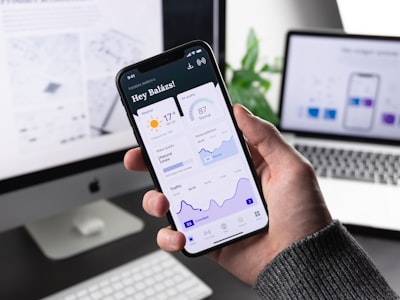
Expense management is one of the critical areas for any organization looking to optimize cash flow, ensure regulatory compliance, and maintain financial transparency. In the digital age, mobility has become an indispensable requirement: employees need to record and approve expenses from anywhere, at any time, and on any device. This article explores the mobile compatibility of expense management solutions, the benefits they bring to businesses, and how Q2BSTUDIO, as a leader in custom software development, can help design and implement systems that meet the demands of the mobile era.
First, it is essential to understand why mobility is crucial in expense management. Employees traveling for work, for example, must capture receipts and submit reimbursement requests in real time. If the tool is not mobile-optimized, delays, errors, and a frustrating user experience arise. Moreover, having a mobile app allows finance managers and area directors to review and approve expenses on the go, speeding up the approval cycle and reducing administrative load.
For an expense management solution to be truly mobile, it must meet a set of technical and usability criteria:
1. Responsive and adaptive design. The interface should automatically adjust to any screen size, from smartphones to tablets, ensuring that forms, dashboards, and reports are readable and easy to use without zooming or horizontal scrolling.
2. Native or progressive applications. A native app (iOS/Android) offers superior performance, camera and geolocation access, and offline functionality. Progressive Web Apps (PWA) combine the deployment ease of a web app with the experience of a native app, allowing access without installation and automatic sync when connectivity is available.
3. Push notifications and real‑time alerts. Users should receive reminders of deadlines, pending approvals, and status changes of their requests. Push notifications ensure that critical information reaches the user regardless of whether the app is open.
4. Mobile security. Multi‑factor authentication (MFA), end‑to‑end encryption, and device management (MDM) are essential to protect sensitive data. Role‑based access policies and integration with cybersecurity solutions also ensure that only authorized users can view and modify critical data.
5. Integration with corporate systems. Connectivity with corporate cards, travel booking systems, ERP, and accounting is fundamental. The API must be robust and allow bidirectional data sync, ensuring that expense information reflects in real time in financial systems.
Once these requirements are met, the mobile solution can deliver tangible benefits:
• Reduced processing times. Capturing receipts with the mobile camera and submitting requests instantly eliminates delays associated with manual data entry.
• Improved compliance. Policy rules are applied automatically in real time, preventing unauthorized expenses and reducing the need for manual audits.
• Greater visibility and control. Mobile dashboards let directors and finance teams monitor spending by project, department, or category, facilitating data‑driven decision making.
• Superior user experience. The ability to work from anywhere increases employee satisfaction and reduces turnover.
In the context of digital transformation, mobility is not just a competitive advantage—it is a necessity. This is where Q2BSTUDIO comes in. As a company specializing in custom software applications, we combine software development expertise with best cybersecurity and cloud practices to create expense management solutions that adapt to each organization’s specific needs.
Q2BSTUDIO offers a comprehensive approach that covers:
• Development of intuitive mobile interfaces. We use modern frameworks like React Native and Flutter to ensure native performance and a smooth user experience.
• Cloud integration. Our team implements infrastructures on AWS or Azure, ensuring scalability, high availability, and compliance with data protection regulations.
• Intelligent automation. We incorporate AI for OCR, automatic expense classification, and anomaly detection.
• Top‑tier security. We implement cybersecurity solutions that include penetration testing, vulnerability analysis, and incident management.
• Business intelligence. We connect expense management to BI/Power BI platforms, offering interactive dashboards and real‑time reports.
Moreover, our development process is based on agile methodologies, allowing rapid iteration and adaptation to business or regulatory changes. Close collaboration with the client ensures that the final tool not only meets functional requirements but also aligns with internal culture and processes.
To illustrate real impact, consider a logistics company that implemented a mobile expense management solution developed by Q2BSTUDIO. Before implementation, the reimbursement process took 10–15 days, and employees reported difficulties uploading receipts and completing forms. With the new solution, the reimbursement time dropped to 3 days, policy compliance rose by 25%, and employee satisfaction increased by 40%. Integration with the ERP also meant that expense data reflected in real time in accounting, reducing the finance department’s workload by 30%.
In conclusion, mobile compatibility in expense management solutions is not an option—it is a strategic obligation. Mobility enables companies to respond quickly to environmental demands, improve operational efficiency, and ensure security and compliance. With Q2BSTUDIO’s backing, organizations can design and implement systems that meet technical standards and deliver tangible value to their financial processes and employee experience.