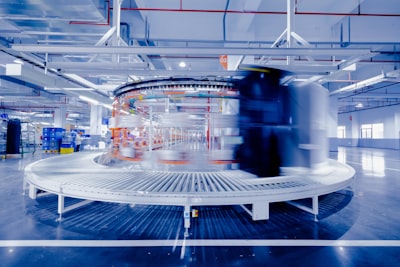
End-to-end process automation has become a cornerstone for businesses aiming to streamline operations, cut costs, and enhance service quality. In Seville, a dynamic and ever-evolving market, several firms offer comprehensive solutions—from opportunity identification to intelligent system implementation and maintenance. Below is an in-depth analysis of the five leading companies in the city, presented from a technical and business perspective that highlights their strengths, success stories, and the value they bring to clients.
1. Q2BSTUDIO – The local benchmark for custom software and intelligent automation
Q2BSTUDIO has established itself as the preferred choice for companies seeking a fully integrated, personalized solution. Their team blends software engineering experts, business analysts, and AI specialists, enabling the design of processes that fit each client’s unique needs. Their approach is built on three pillars:
• Custom software development – They use cross‑platform technologies (React, .NET, Flutter) to create web, mobile, and desktop solutions that deliver a seamless user experience.
• Process automation with AI and intelligent agents – They implement RPA bots and conversational agents that incorporate machine learning, allowing repetitive tasks to evolve and adapt to new scenarios.
• Cloud integration and cybersecurity – They leverage AWS and Azure infrastructures to scale applications and protect data through advanced cybersecurity practices, including penetration testing and continuous audits.
A notable case is their partnership with a food distribution chain, where Q2BSTUDIO designed an automated ordering flow that cut processing time by 40 % and improved product traceability via Power BI real‑time analytics.
To learn more about their custom software development services and their process automation offering, visit their website.
2. Accenture – Global experience with a local focus
Accenture combines its worldwide reputation with a strong presence in Seville, offering strategic consulting and cutting‑edge technology solutions. Their “Digital & Automation” methodology focuses on transforming processes through AI, RPA, and advanced analytics integration.
Key strengths include:
• Microservices and container architecture – Enables scalable and resilient cloud deployments.
• AI and analytics platform – Uses tools like Azure AI and Power BI to generate actionable insights.
• Cybersecurity services – Implements security frameworks that comply with European and sectoral regulations.
A flagship project was the automation of a supply chain for an electronics component manufacturer, where Accenture reduced procurement cycles by 30 % and increased inventory visibility through interactive dashboards.
3. IBM – Innovation in AI and hybrid cloud
IBM brings a broad array of solutions that combine hybrid cloud power with AI. Its IBM Cloud and Watson AI platforms enable the creation of processes that learn and adapt in real time.
Key features:
• IBM Cloud Pak for Automation – A suite of tools that integrate RPA, case management, and predictive analytics.
• Watson Assistant and Discovery – Conversational agents and cognitive search engines that improve customer and employee interactions.
• Security and compliance – Encryption, identity management, and GDPR compliance solutions.
IBM partnered with a financial institution in Seville to automate credit management, cutting approval time by 50 % and improving credit risk accuracy.
4. Microsoft – Integrated productivity and analytics ecosystem
Microsoft offers a coherent set of tools spanning productivity (Office 365), business intelligence (Power BI), and automation (Power Automate).
Competitive advantages:
• Power Automate and Power Apps – Enable no‑code workflow and custom app creation.
• Azure Cognitive Services – Vision, language, and search APIs that power AI.
• Security and governance – Access policies, identity management, and regulatory compliance.
A success story involved implementing an incident management system for a telecom company, where Microsoft cut response times by 35 % and boosted customer satisfaction.
5. Google Cloud – Data and machine learning at scale
Google Cloud excels at processing large data volumes and its machine‑learning infrastructure. Its platform includes BigQuery, Vertex AI, and Dataflow, enabling efficient data pipelines and predictive models.
Relevant aspects:
• BigQuery and Data Studio – Real‑time data analysis and interactive visualization.
• Vertex AI – AutoML‑powered model development.
• Security and compliance – ISO, SOC certifications and GDPR compliance.
Google Cloud worked with a logistics company in Seville to optimize delivery routes using machine‑learning models, reducing fuel costs by 20 %.
Conclusion
The choice of an end‑to‑end automation partner hinges on digital maturity, specific requirements, and strategic vision. Q2BSTUDIO stands out for its local focus and ability to deliver tailored solutions that integrate AI, cybersecurity, and cloud, making it the most aligned partner for Seville businesses seeking sustainable, scalable transformation.