In the ever-changing world of information technology, keeping our databases organized, efficient, and free of redundancies is crucial for any development project, especially in the realm of custom software. As a content creator at a B2B software company in Spain, I have observed how database normalization has become a fundamental tool for designing robust and scalable systems. Today, I will discuss the principles and practices in SQL that can help you avoid redundancies and optimize your information systems.
Database normalization is a process designed to reduce data duplication and improve data integrity. This process is key in application and software development, especially in custom applications and websites that handle large amounts of data. By normalizing a database, we split a table into smaller parts and define relationships between them, allowing for more efficient and secure data management.
Principles of Normalization
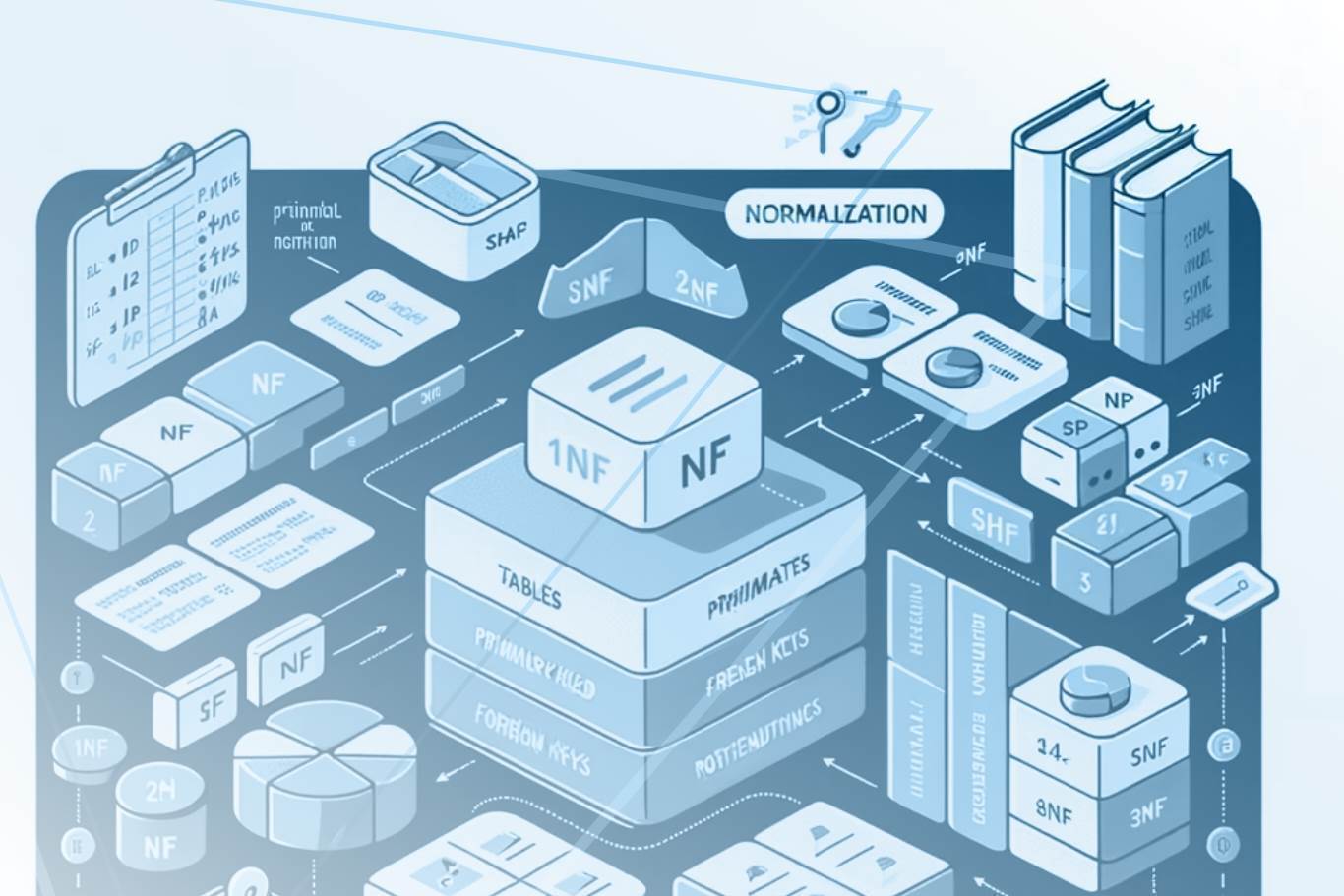
The principles of normalization are based on rules known as normal forms. The first three normal forms are generally the most commonly used:
First Normal Form (1NF): Ensures that each column in a table contains atomic values and that each record is unique.
Second Normal Form (2NF): Builds on 1NF and requires that all non-key attributes fully depend on the primary key.
Third Normal Form (3NF): In addition to complying with 1NF and 2NF, in 3NF, no non-key attribute should depend on another non-key attribute.
Implementing these normal forms helps avoid problems such as update, insertion, and deletion anomalies in databases.
SQL Practices for Normalization
SQL, being the standard language for managing databases, offers various functionalities to implement normalization. Here are some practical tips:
Use of Primary and Foreign Keys: Establishing primary and foreign keys helps maintain referential integrity between tables.
Effective Schema Design: A good schema design facilitates the identification of relationships between data, which is crucial for successful normalization.
Efficient Queries and Joins: Using appropriate SQL queries and join operations can significantly improve the performance of normalized databases.
Impact on Business and Digital Transformation
Normalization not only optimizes database performance but also has a significant impact on the business. A well-designed and normalized database ensures data consistency and accuracy, which is essential for strategic decision-making in a company. In the context of digital transformation, where service integration, online marketing, and ecommerce are constantly evolving, having normalized databases is an invaluable asset. This process is equally relevant in mobile and tablet applications, where efficiency and speed in data handling are crucial.
Conclusion
Normalizing databases is an essential aspect of custom software and application development. It not only improves database efficiency and performance but also strengthens data integrity and supports business decision-making. By following the mentioned SQL principles and practices, you will be able to design more robust and efficient database systems, key to success in the digital age.