
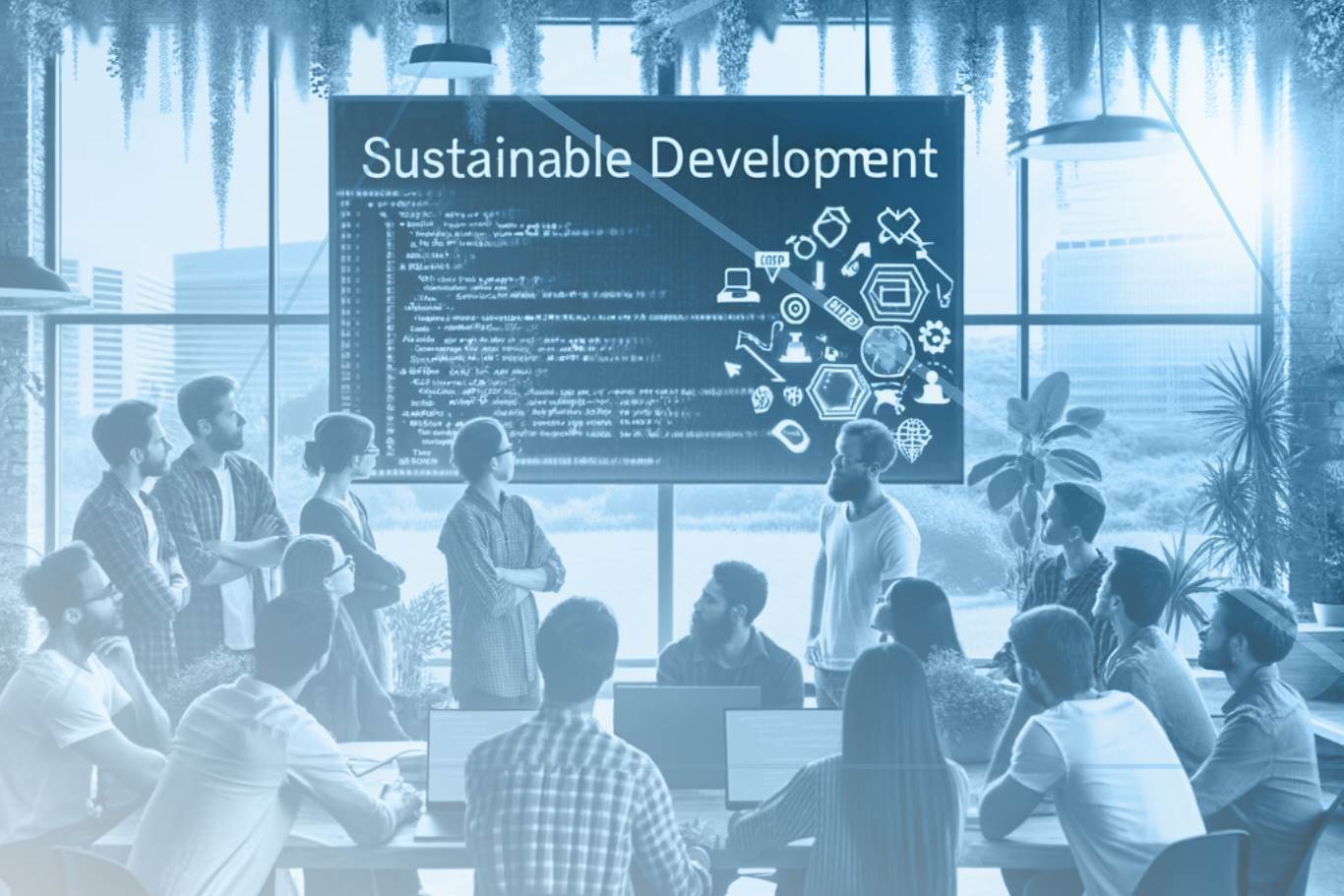
At a time when digitalization has become the heart of almost all business operations, talking about sustainable software development is no longer an option, but a necessity. This approach not only encompasses efficiency and resource optimization in software creation, but also how it aligns with current business needs without compromising the ability of future generations.
Sustainability in software development takes various forms: from custom software that precisely fits what a company needs, minimizing resource waste, to development practices that consider the environmental impact of stored data or created applications. But how can we implement these principles in our projects?
Efficient service integration: In the world of web development, service integration has become fundamental. This involves connecting applications, systems, and software to create more complete and efficient solutions. For example, integrating marketing services and databases into a website not only improves SEO positioning but also optimizes the user experience, making every visit count.
Cross-platform design and development: The design and development of applications for mobile phones and tablets, and their adaptation to different platforms, is essential today. A cross-platform approach ensures that your software or online store is accessible to a wider audience, improving the user experience and fostering greater online reach.
Digitalization and digital transformation: Digital transformation goes beyond having an internet presence; it is about using technology to change how we operate and deliver value to customers. From using blockchain to secure transactions to digitalizing internal processes, technology is redefining what it means to do business in the 21st century.
Focus on online marketing: The role of online marketing, including SEM and SEO, is crucial in promoting applications and software. Good online positioning not only increases the visibility of your development service or product but also contributes to a long-term sustainable business strategy, continuously attracting potential customers.
Data privacy and security: In a world where cookies and banners are commonplace, data protection has become a priority. Custom application development must include robust security practices and comply with privacy regulations to protect users' sensitive information.
Ecommerce and online stores: Ecommerce has revolutionized the way we buy and sell products. Developing online stores that are secure, easy to use, and optimized for different devices is essential for any business that wants to thrive in the digital age.
Sustainability and efficiency: Last but not least, sustainable software development involves creating solutions that not only meet current objectives but are also efficient in the long term. This means using technologies that minimize energy consumption, optimizing algorithms to require less processing power, and designing applications that are easy to maintain and update.
Sustainable software development is a way forward for companies seeking not only to survive but to thrive in today's digital landscape. Adopting these principles and practices is not just a matter of environmental or social responsibility, but a smart business strategy that ensures relevance and competitiveness in an ever-evolving world.

