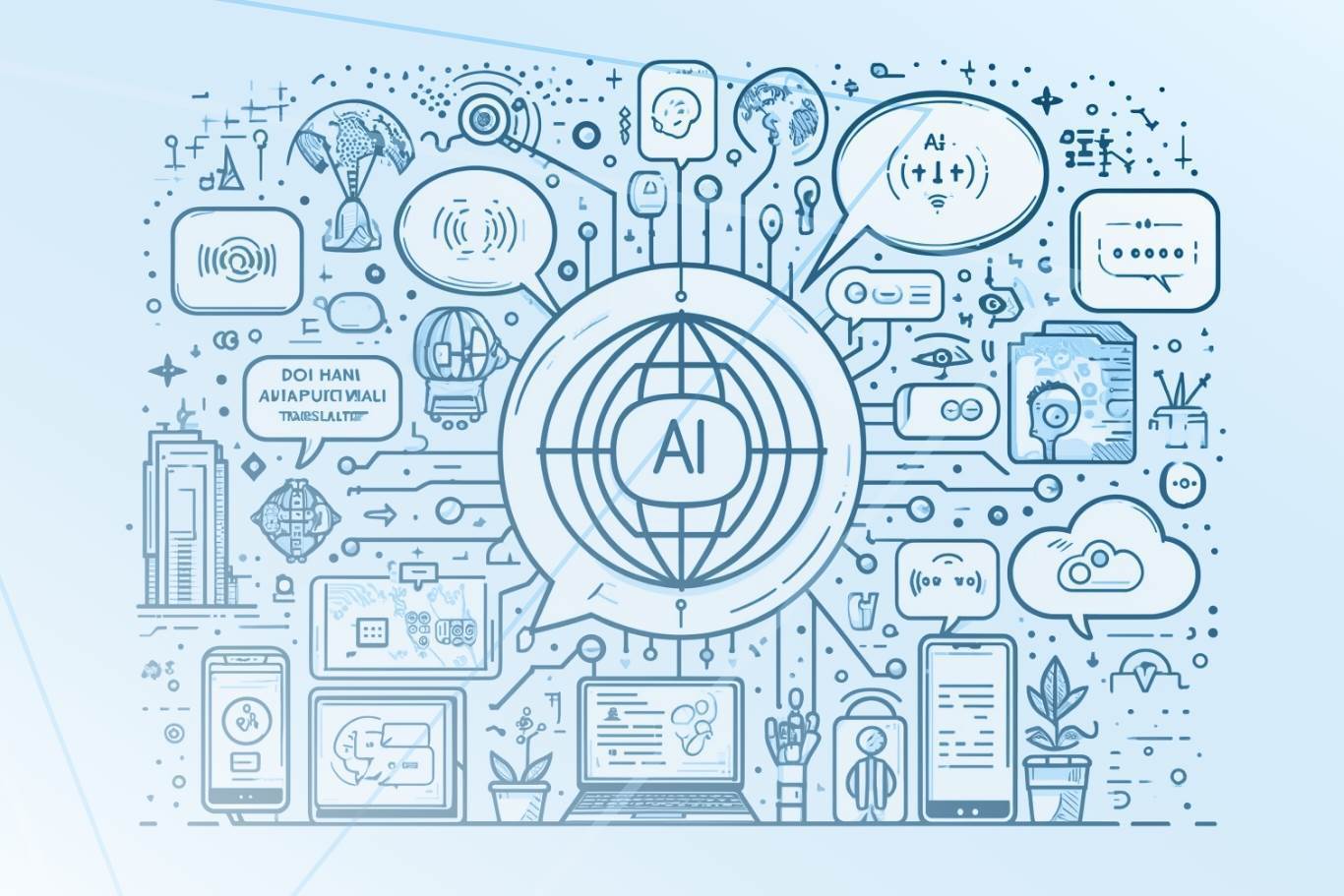
The evolution of machine translation
Before, translation was an entirely human process that required not only a deep knowledge of other languages, but also an understanding of cultures. Today, AI and the development of sophisticated software applications have revolutionized this field, making machine translation more accessible and accurate. Companies of all sizes, from small businesses to large corporations, use these tools to translate everything from web pages to legal and technical documents.
How AI-powered machine translation works
AI-powered machine translation uses advanced language models and extensive databases to interpret and translate texts. These custom software tools not only translate words, but also understand contexts and nuances, resulting in more natural and accurate translations. Additionally, the machine learning capability means that the more the software is used, the better it becomes at translation.
Real-world applications
In the professional field, the integration of machine translation services into applications and software is increasingly common. For example, many multinational companies use custom applications to instantly translate communications between teams in different countries, thus improving collaboration and efficiency. Online stores use machine translations to offer their products in multiple languages, which significantly expands their market and improves the user experience.
Advantages for marketing and SEO
From an online marketing perspective, machine translation is a powerful tool for improving positioning in different language markets. By translating the content of web pages and marketing materials, companies can reach a much wider audience. Additionally, optimizing content for SEO in multiple languages increases online visibility and attracts more visitors to the company's web pages.
Challenges and ethical considerations
Despite its many advantages, AI-powered machine translation also presents challenges. Accuracy remains a concern, especially in texts with specialized jargon or colloquial language. Additionally, there are ethical concerns related to the privacy and security of the data used in training these systems.
Digital transformation and the implementation of technologies such as blockchain can offer solutions to these problems, ensuring that data is handled securely and transparently.
Looking to the future
Machine translation is evolving rapidly, and future innovations promise to further improve its accuracy and usefulness. The integration of AI into more platforms and devices, from mobile phones to tablets, ensures that this technology will continue to play a crucial role in breaking down language barriers.
Companies that adopt and adapt these technologies will not only improve their ability to operate in a global market, but will also position themselves as leaders in the adoption of digital innovations.