Autonomous vehicles need to perceive their environment quickly and accurately. However, real-time perception is a challenge when models process millions of LiDAR points and high-resolution images. The solution lies in sensor fusion, model quantization, and acceleration with TensorRT.
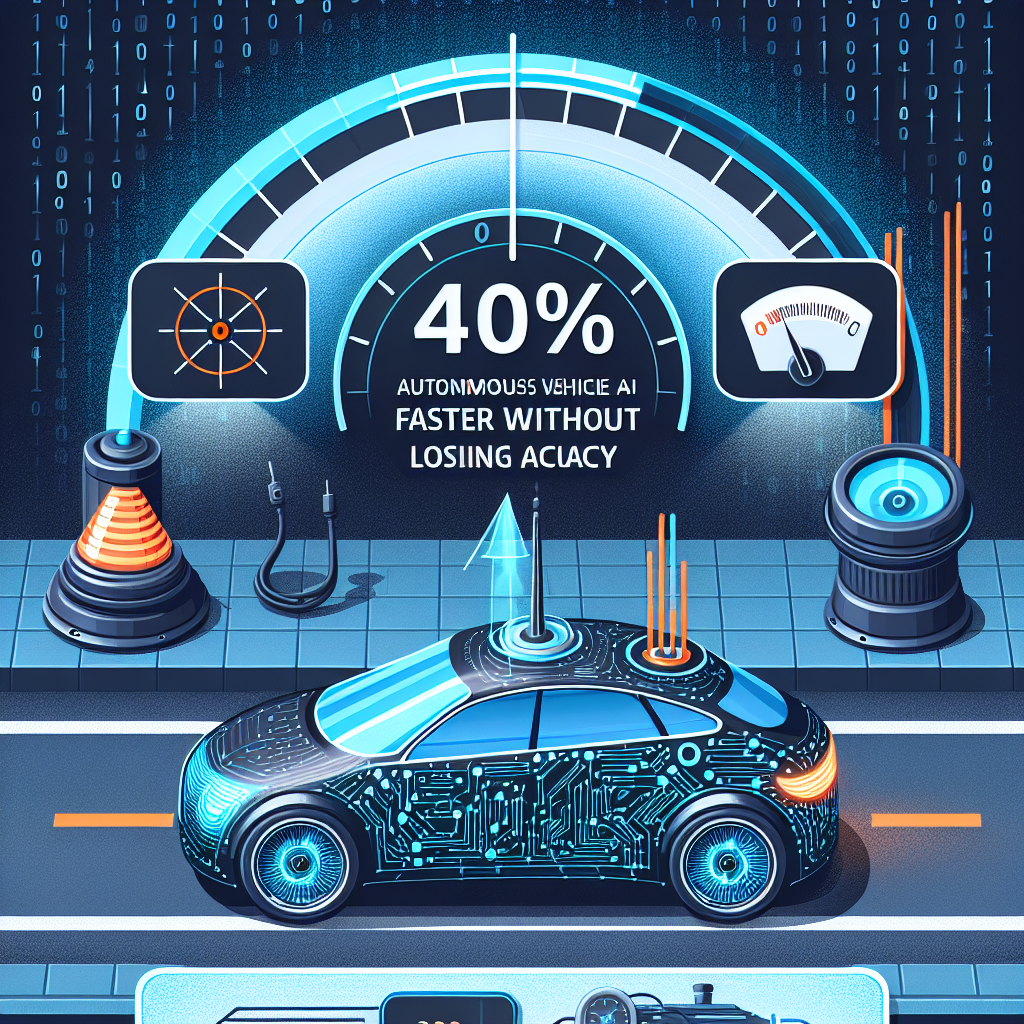
At Q2BSTUDIO, a company specialized in development and technological services, we optimized a multi-modal perception model achieving 40% faster performance, while maintaining the accuracy needed to detect pedestrians and obstacles on the road.
The challenge lies in the combination of LiDAR and cameras. While LiDAR provides accurate depth estimates, it generates millions of points per second. Cameras, on the other hand, offer texture and color details but lack depth. Fusing both sensors requires a balance between speed and accuracy.
One of the most complex problems was data desynchronization. LiDAR and the camera do not capture information simultaneously, causing mismatches in object positions. To solve this, we implemented ego-motion compensation using Kalman filters, reducing misalignment by 85% and improving accuracy in detecting moving objects.
Another obstacle was fusing sensor data into a single representation. To address this, we developed a Bird’s Eye View (BEV) model that projects LiDAR points onto the camera image plane. This approach included:
- Calibration of LiDAR and camera with transformation matrices.
- Projection of LiDAR points into image space.
- Feature fusion with a cross-attention transformer.
Thanks to this solution, we improved detection by 29%, allowing the model to better understand its environment.
Despite efficient data fusion, inference still needed optimization. We reduced processing times through quantization with TensorRT. Transforming models from PyTorch to TensorRT, along with converting calculations from FP32 to INT8 precision, allowed us to:
- Reduce inference time from 250ms to 75ms per frame.
- Decrease memory usage by 40%.
- Improve real-time performance to 5 FPS.
At Q2BSTUDIO, we continue to explore end-to-end learning models, where perception and planning converge into a single neural network. These models could revolutionize autonomous navigation, although they still require massive datasets and solutions to improve their interpretability.
With the combination of sensor fusion, motion correction, and optimization with TensorRT, we made AI for autonomous vehicles faster and more efficient. Our next step is to continue scaling these solutions and applying them in real-world scenarios.
At Q2BSTUDIO, we work with advanced technologies to offer cutting-edge solutions in the artificial intelligence and autonomous vehicle sectors. If you are looking to optimize your perception models to improve speed and accuracy, contact us.