In the world of software development, efficient management of concurrent and parallel tasks is essential to ensure system performance and scalability. A simple analogy that helps us understand these concepts is that of a busy coffee shop, where handling multiple orders and staff collaboration are key to efficient service.
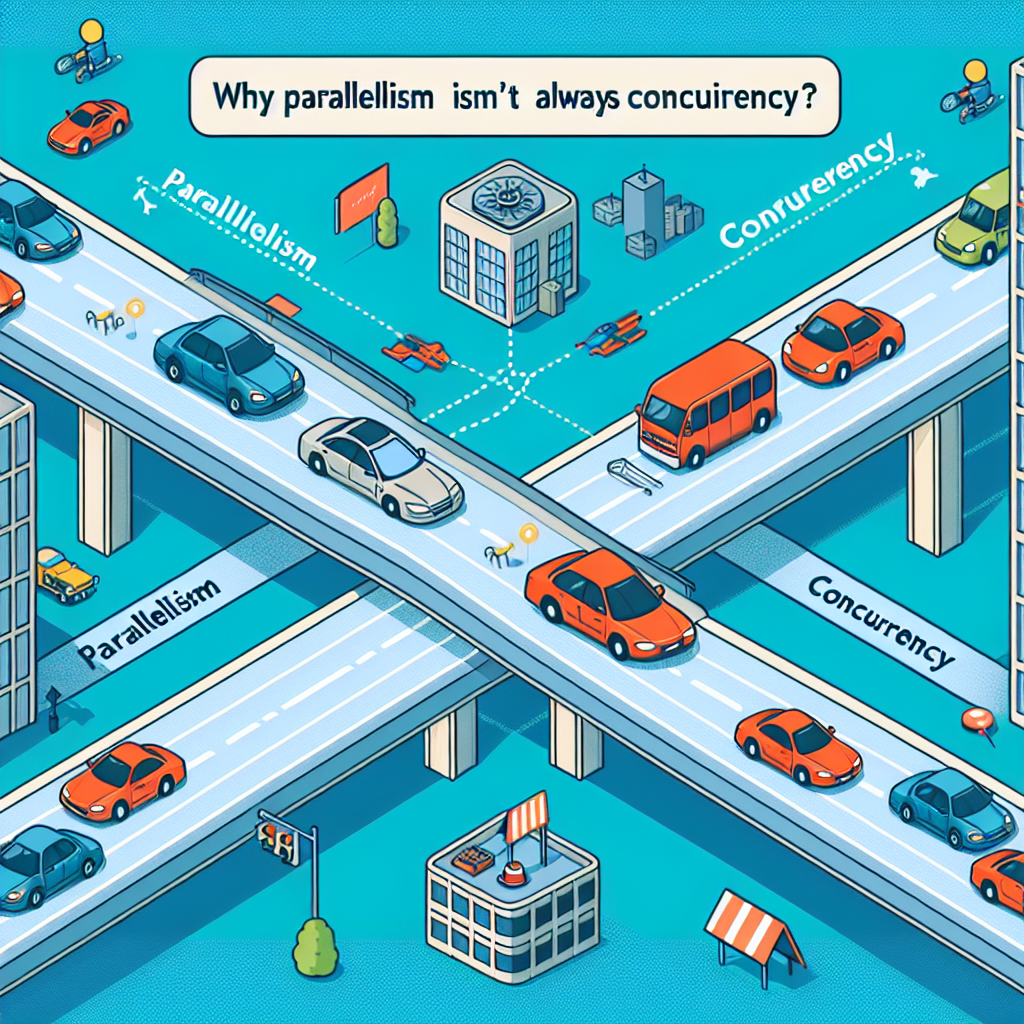
Concurrency involves structuring and managing multiple tasks by quickly switching between them, giving the illusion of simultaneity. In contrast, parallelism refers to the actual execution of multiple tasks at the same time using several independent resources. Understanding the difference between these two approaches is crucial for optimizing applications and avoiding performance issues.
The Go programming language adopts an efficient approach to concurrency through the use of goroutines, lightweight threads managed by Go's runtime scheduler. These allow multiple functions to run concurrently without the overhead of traditional operating system threads, making it easier to build highly concurrent applications with minimal performance impact.
However, concurrency also presents significant challenges such as race conditions, where multiple threads access shared resources without proper synchronization, potentially leading to unpredictable results. To handle this, mechanisms like mutexes and condition variables are used to ensure that only one goroutine accesses a resource at a time, preventing inconsistent results or data corruption.
Another common issue in concurrency is deadlock, a situation where multiple goroutines become stuck waiting for resources that will never become available. To prevent this, techniques such as consistent resource ordering or introducing timeouts and recovery wait times can be used.
To efficiently manage the execution of concurrent tasks, worker pool and rate limiting models are essential. Worker pools allow distributing tasks among a fixed number of goroutines, preventing system overload. On the other hand, rate limiting ensures that requests are processed at a controlled pace, avoiding overload in critical systems.
At Q2BSTUDIO, we focus on implementing advanced technological solutions that leverage the best practices of concurrency and parallelism. Our team of development experts designs performance-optimized applications, ensuring systems are scalable, reliable, and secure.
As the demand for high-performance applications continues to grow, the ability to design efficient concurrent systems becomes increasingly crucial. Thanks to techniques such as goroutines, synchronization with mutexes, and structured execution models, we can ensure our software runs smoothly even under heavy workloads, thereby optimizing performance and user experience.