
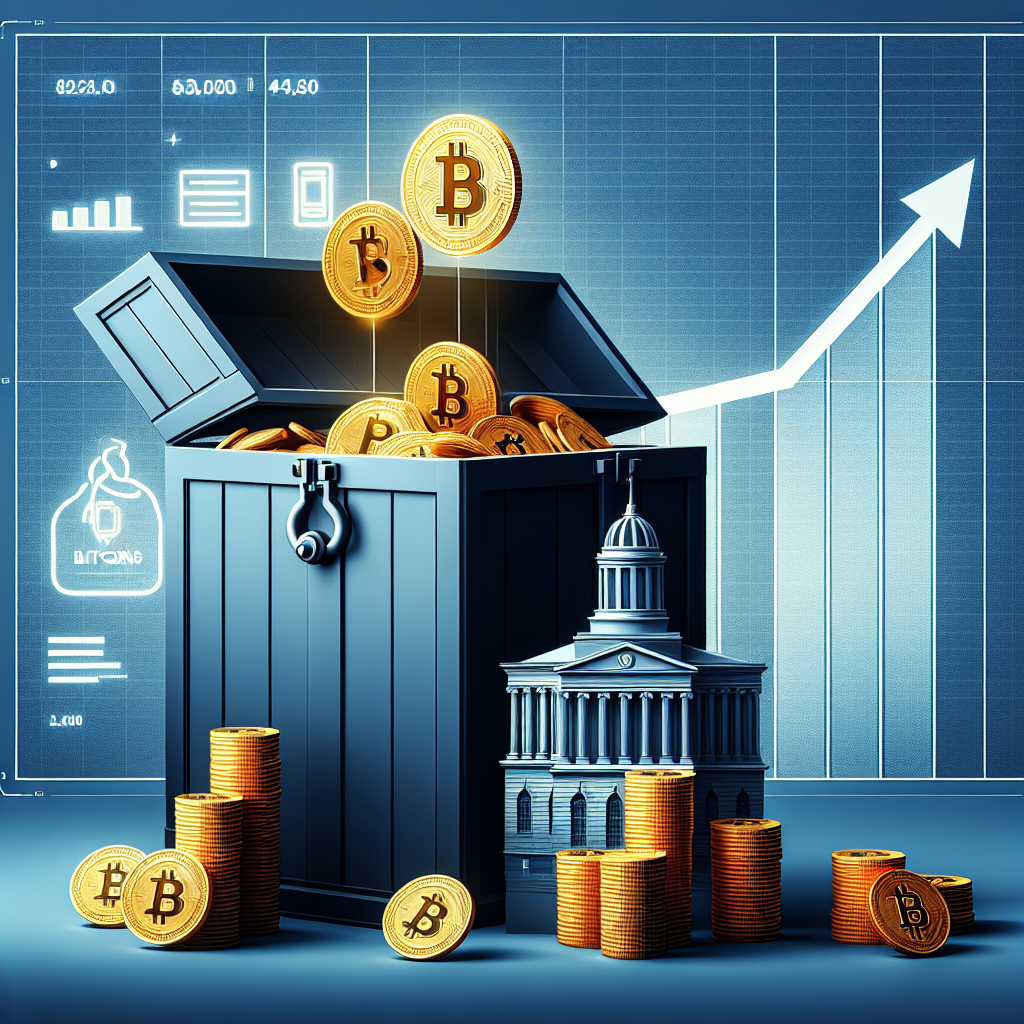
For years, Bitcoin and cryptocurrencies have been seen as an alternative to traditional financial systems. However, the question now arises as to whether the U.S. government could be considering Bitcoin as part of its strategic reserves. Although this idea once seemed like pure speculation, more and more governments are exploring digital assets as a hedge against inflation and economic uncertainty.
There are indications that the U.S. already holds a significant amount of Bitcoin, not through direct purchases, but through asset seizures in criminal investigations. Over the years, law enforcement agencies have confiscated billions of dollars worth of Bitcoin, especially from dark web operations. Although these assets have traditionally been auctioned off, in some cases the government appears to have chosen to retain them. All of this suggests a possible change in strategy.
Several reasons could drive the U.S. to consider Bitcoin as a strategic asset:
• Increased institutional adoption – Major financial players, such as banks and institutional investors, are integrating Bitcoin into their portfolios.
• Growing interest in digital currencies – While the Federal Reserve explores launching a digital dollar (CBDC), Bitcoin remains the most established decentralized alternative.
• Global competition – Countries like China and Russia are seeking to reduce their dependence on the dollar in international trade. Bitcoin's neutrality could give it a key role in the global financial landscape.
Among the main reasons the U.S. would consider holding Bitcoin in its reserves are:
1. Protection against inflation and debt – With growing national debt and the devaluation of fiat currencies, Bitcoin could function as a safe haven, similar to gold.
2. Maintaining financial dominance – Given China's push for a digital yuan and other international financial initiatives, the U.S. may need to adopt digital assets to maintain its strategic advantage.
3. National security – Bitcoin is censorship-resistant and, in times of geopolitical uncertainty, could ensure financial stability without relying on traditional banking systems.
4. Boosting the crypto and Web3 industry – With the rise of DeFi platforms, blockchain games, and NFTs, U.S. adoption of Bitcoin could accelerate the development of decentralized applications and innovative financial tools.
Although the advantages are clear, there are also challenges:
• Regulatory uncertainty – The regulations surrounding cryptocurrencies in the U.S. are still evolving and are not consistent.
• Bitcoin volatility – Unlike gold, Bitcoin experiences large fluctuations in value, which can pose a risk in its adoption as a reserve.
• Resistance from the traditional financial system – The Federal Reserve and major banks could see Bitcoin as a threat to current monetary policies.
If the U.S. government were to officially announce that it holds Bitcoin in its reserves, significant impacts could occur:
• Increase in Bitcoin's price – Government backing would be a strong message of legitimacy, driving up its price.
• Adoption by other countries – If the U.S. makes this decision, other nations might feel pressured to follow suit.
• Greater institutional confidence – More companies and banks would consider Bitcoin as a reliable reserve asset.
• Evolution of the U.S. dollar – This could lead to changes in the global financial system, either through a digital dollar or greater integration of Bitcoin into financial markets.
Although there is still no official confirmation on whether the U.S. is accumulating Bitcoin as part of its financial strategy, the possibility is more viable than ever. With the rapid adoption of blockchain and the growth of the Web3 ecosystem, the country has the opportunity to lead this digital evolution.
At Q2BSTUDIO, a company specialized in development and technology services, we are aware of these trends and offer innovative solutions for companies and entrepreneurs looking to venture into blockchain technology, tokenization, and the Web3 ecosystem. The growing digital transformation opens new opportunities for those who want to get ahead of the financial future. Do you think the U.S. should adopt Bitcoin as part of its reserves?



