A few weeks ago I developed a Maven Central MCP server that lets AI assistants instantly access dependency and version information, a useful tool for quick searches and version comparisons, but I discovered a significant gap between saying something needs updating and explaining how to do it.
The gap was moving from knowing that an update is needed to understanding how to perform complex updates, especially major version jumps, where developers still had to leave the conversation with their assistant and search for up-to-date migration guides.
To close that gap, I integrated Context7, a solution that injects current documentation and version-specific code examples directly into AI prompts, replacing outdated search results with official documentation and working examples.
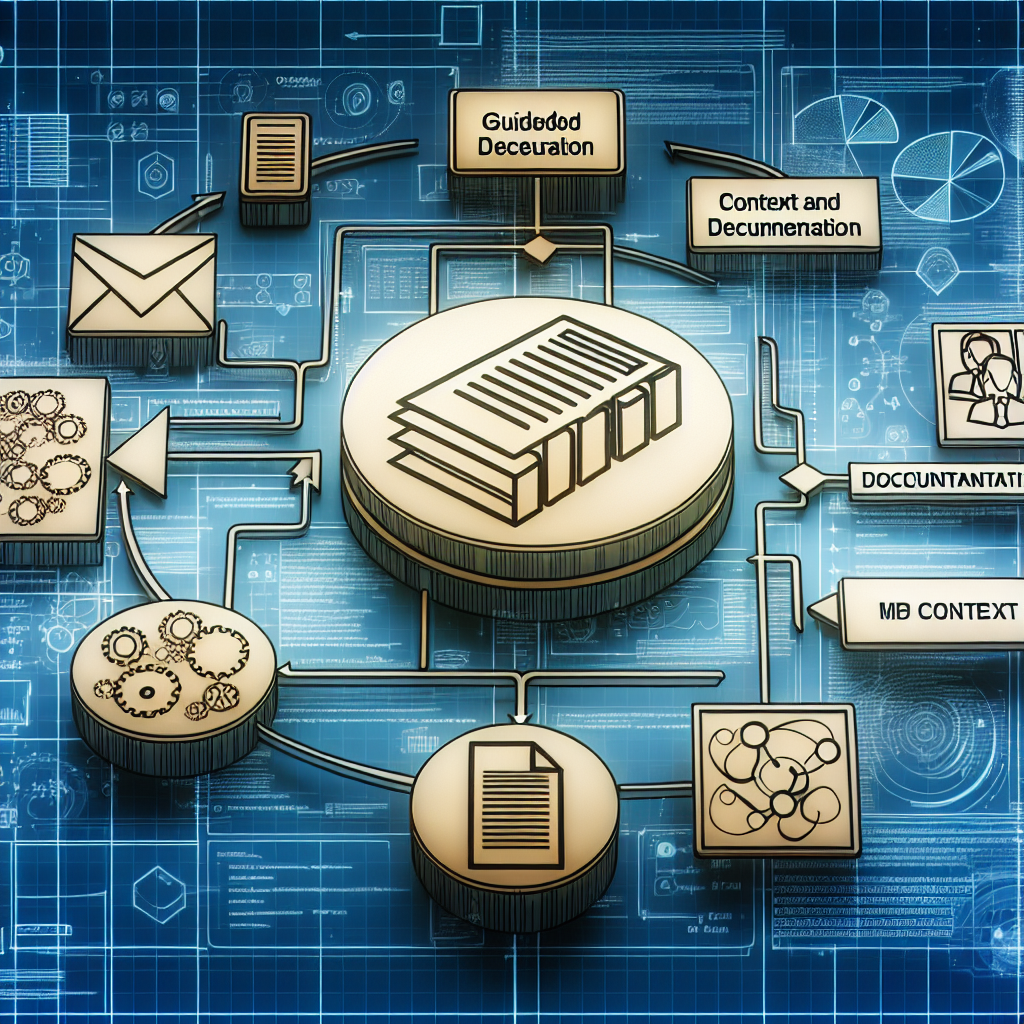
Instead of tightly merging Maven's analysis capabilities with documentation retrieval, I implemented a pattern I call guided delegation where each tool maintains its focus and the AI orchestrates actions using smart hints.
Guided delegation steps 1 Maven analysis Analyzes dependencies and detects update scenarios 2 Context7 hints When complex updates are detected, lightweight suggestions are included in the response 3 AI orchestration The AI assistant uses those hints to make targeted queries to Context7 4 Dual MCP architecture The server acts as an MCP server exposing Maven tools and as an MCP client exposing Context7 tools
This separation creates a seamless user experience while keeping each tool focused on what it does best: dependency analysis on one hand and contextual, up-to-date documentation on the other.
The technical implementation is straightforward thanks to Spring AI's MCP client bootstrap. The main configuration is done in application.yaml and Spring AI handles connecting to Context7 via server-sent events, exposing Context7 tools as if they were its own and allowing the assistant to access them alongside the Maven tools.
With the integration enabled, dependency analysis responses incorporate Context7 guide hints within the response model when major updates or complex scenarios are detected. Those hints include search suggestions, guidance on documentation focus, and an assessment of migration complexity, so the AI assistant can directly call Context7 tools to get up-to-date guides and code examples.
The result for the developer is a single conversation that combines analytical intelligence about dependencies with practical, up-to-date documentation. For example, when a major Spring Boot jump from 2.7 to 3.2 is detected, instead of just giving the target version, the response includes hints like searching for migration guides, focusing on breaking changes, and recommendations to check requirements such as the Java version and migration to Jakarta EE, and the AI can retrieve the official document and code examples instantly.
Example of a practical workflow: the developer asks whether they should update Spring Boot and how to do it, the assistant first reports that it is a major update with potential breaking changes and then, using Context7 tools, provides the official migration guide with concrete steps such as upgrading to Java 17 or higher, changing javax to jakarta, reviewing configuration properties, and adapting security configuration, including updated code examples.
Some key takeaways: compose instead of integrate, allowing specialized servers to work together through smart hints; trust AI assistants as orchestrators that understand context and call tools in the right sequence; and provide specific contextual hints rather than generic suggestions to search for documentation.
This guided delegation pattern applies to other development workflow scenarios such as security analysis where dependency analysis detects vulnerabilities and suggests searches in CVE databases and patch documentation, performance monitoring that suggests APM documentation, cloud migrations with hints directed at AWS and Azure guides, and code quality analysis that suggests best practices and patterns documentation.
The integration is simpler than it seems, v1.2.0 of the Maven Tools server includes Context7 by default, so restarting the MCP client will give the assistant the new tools. In container environments, simply forcing the image download will get the latest version and start leveraging contextual documentation immediately.
At Q2BSTUDIO, a custom software and application development company, we specialize in artificial intelligence, cybersecurity, and AWS and Azure cloud services. We offer custom software and custom applications, business intelligence and AI services for companies, AI agents, and Power BI consulting, all aimed at improving the productivity and security of your projects. Our experience in artificial intelligence and cybersecurity allows us to integrate AI agents into secure workflows, optimize processes through business intelligence services, and deploy solutions on AWS and Azure cloud services that scale according to your needs.
If your organization is looking to implement similar capabilities, Q2BSTUDIO can help design a composite architecture of specialized tools, integrate dependency analysis with contextual documentation, and deploy custom software solutions that include artificial intelligence, AI agents, AWS and Azure cloud services, cybersecurity, and Power BI for visualization and decision-making.
If you want to test the integration, restart your MCP client or deploy the latest Maven Tools server image, and if you need support or custom software development, contact Q2BSTUDIO for consulting on artificial intelligence, cybersecurity, business intelligence services, and cloud migrations. We are interested in receiving feedback on how Context7's automatic hints work in your scenarios and what other workflows you would like to orchestrate with AI assistants.
In summary, guided delegation allows combining dependency analysis and contextual documentation without coupling tools, leveraging the orchestration capability of AI assistants to deliver complete updates and migration guides in a single conversation, a solution that Q2BSTUDIO can implement as part of its custom software services, custom applications, artificial intelligence, cybersecurity, AWS and Azure cloud services, business intelligence services, AI for companies, AI agents, and Power BI.