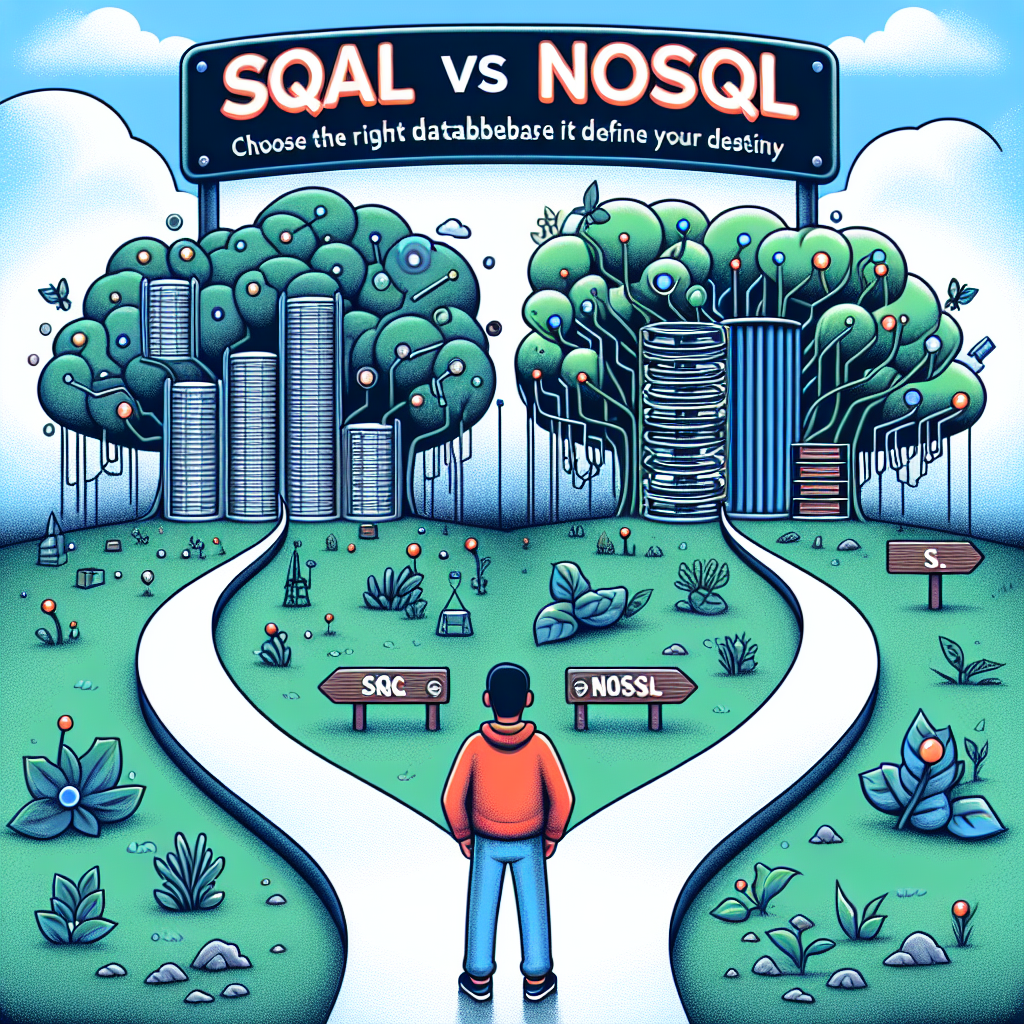
SQL vs NoSQL: Choosing the right database before it decides your destiny
The choice between SQL and NoSQL is not just a technical discussion about storage systems; it is a decision that defines how your application will think, grow, and scale. Choosing poorly can turn your database into an obstacle rather than a tool for building value.
What is SQL? In short, SQL is the standardized language for relational databases. Data is organized in tables with rows and columns, and a strict schema is applied. It is ideal for transactional operations, complex queries, and environments where consistency is critical.
What is NoSQL? NoSQL stands for Not Only SQL and groups non-relational models such as key-value, document, wide column, and graph. These systems offer flexible schemas and were designed for high performance and horizontal scalability, especially with semi-structured or unstructured data.
When to use SQL? SQL is the natural choice when you need structure and ACID transactional guarantees in financial systems, ERP, CRM, e-commerce, and applications that require integrity and complex queries.
When to use NoSQL? NoSQL is preferable when requirements change quickly, when you work with large volumes of unstructured or semi-structured data, when you need high read and write rates, and when distributed architecture and horizontal scalability are a priority.
Typical use cases: SQL for transactions, business analytics, data warehousing, and systems where relationships between entities are central. NoSQL for real-time analytics, social networks, IoT, multimedia content, and mobile applications with variable data models.
Examples of popular databases: SQL: MySQL, PostgreSQL, Oracle, Microsoft SQL Server, SQLite. NoSQL: MongoDB, Cassandra, Redis, Couchbase, Neo4j. Each has its operational advantages and levels of industry support.
Pros and cons: SQL Pros: strong consistency, powerful query capabilities, mature ecosystem, transactional support, standardization. Cons: rigid schema, more expensive vertical scaling, and lower efficiency with unstructured data.
NoSQL Pros: horizontal scalability, flexible schema, high performance for large volumes, and speed for product iterations. Cons: eventual consistency, limited strong consistency in complex queries, learning curve due to diverse models, and reduced or partial ACID guarantees.
Understanding ACID: Atomicity, Consistency, Isolation, Durability. These properties protect critical transactions, preventing inconsistencies such as charges without credits or partial states. Relational databases implement mechanisms such as logging, locking, and recovery to guarantee these properties.
BASE and the philosophy of many NoSQL systems: Basically Available, Soft state, Eventual consistency. Many NoSQL systems prioritize availability and data partitioning, sacrificing immediate consistency to achieve higher performance and fault tolerance in distributed environments.
Vertical vs. horizontal scaling: Vertical scaling means increasing the resources of a single machine: more CPU, more memory, better disks. Traditionally, many SQL databases have followed this path. Horizontal scaling involves adding more machines and distributing data. NoSQL was born with distributions and sharding in mind, making it easier to scale with additional nodes.
Unstructured and semi-structured data: SQL databases require a fixed schema, which complicates storing JSON, multimedia, free text, and variable attributes. Although modern relational databases offer JSON columns and indexing functions, document databases natively handle nested structures and variable fields without constantly altering schemas.
Best practices for deciding: Start with the data model. If the data has complex relationships and you need ACID transactions, choose SQL. If schemas change frequently or volume and the need for horizontal scale are paramount, consider NoSQL. Also think about operational costs, development time, and availability requirements.
Combining technologies: Many modern architectures use polyglot persistence patterns, choosing the best database for each need: transactional parts in SQL and document storage or caches in NoSQL for performance and flexibility.
How Q2BSTUDIO can help: At Q2BSTUDIO, we develop custom solutions and custom software for companies that need to make sound technical decisions from the start. We are specialists in artificial intelligence and offer AI services for businesses, AI agents, and Power BI solutions as part of our business intelligence services. We also provide cybersecurity, AWS and Azure cloud services, and consulting for scalable and secure architectures.
We offer architecture audits to recommend whether your project benefits more from SQL, NoSQL, or a mix of both, and we design secure data pipelines optimized for performance and cost. We implement AI agent integrations to automate processes and artificial intelligence models that improve real-time decision-making.
Practical recommendations: If your product is transactional and requires integrity, choose PostgreSQL or MySQL and take advantage of ACID capabilities and replication tools if you need high availability. If you work with large volumes of events or documents, consider MongoDB, Cassandra, or Redis for caching and ultra-fast responses. For complex relationships and graphs, use Neo4j.
Optimization and cost: Keep in mind that the choice of database has a direct impact on operational cost, scalability, and development speed. Q2BSTUDIO helps optimize queries, design indexes, choose efficient schemas, and select infrastructures on AWS and Azure cloud services that minimize cost and maximize performance.
Success stories and comprehensive services: With our experience in custom software, we have migrated monolithic systems to distributed architectures, introducing artificial intelligence solutions and Power BI tools for advanced reporting. We have also implemented cybersecurity policies to protect sensitive data and ensure regulatory compliance.
Conclusion: There is no universal answer. The best database is the one that aligns with your data model, your consistency requirements, your growth plan, and your budget. Start with clarity, define usage scenarios, and let the architecture adapt to real needs. If you need technical advice on selection, design, or implementation, Q2BSTUDIO is ready to accompany you with custom application development services, custom software, artificial intelligence, cybersecurity, AWS and Azure cloud services, business intelligence services, AI for businesses, AI agents, and Power BI.
Contact Q2BSTUDIO for an initial evaluation and a practical proposal that allows you to choose the right database today and grow without surprises tomorrow