
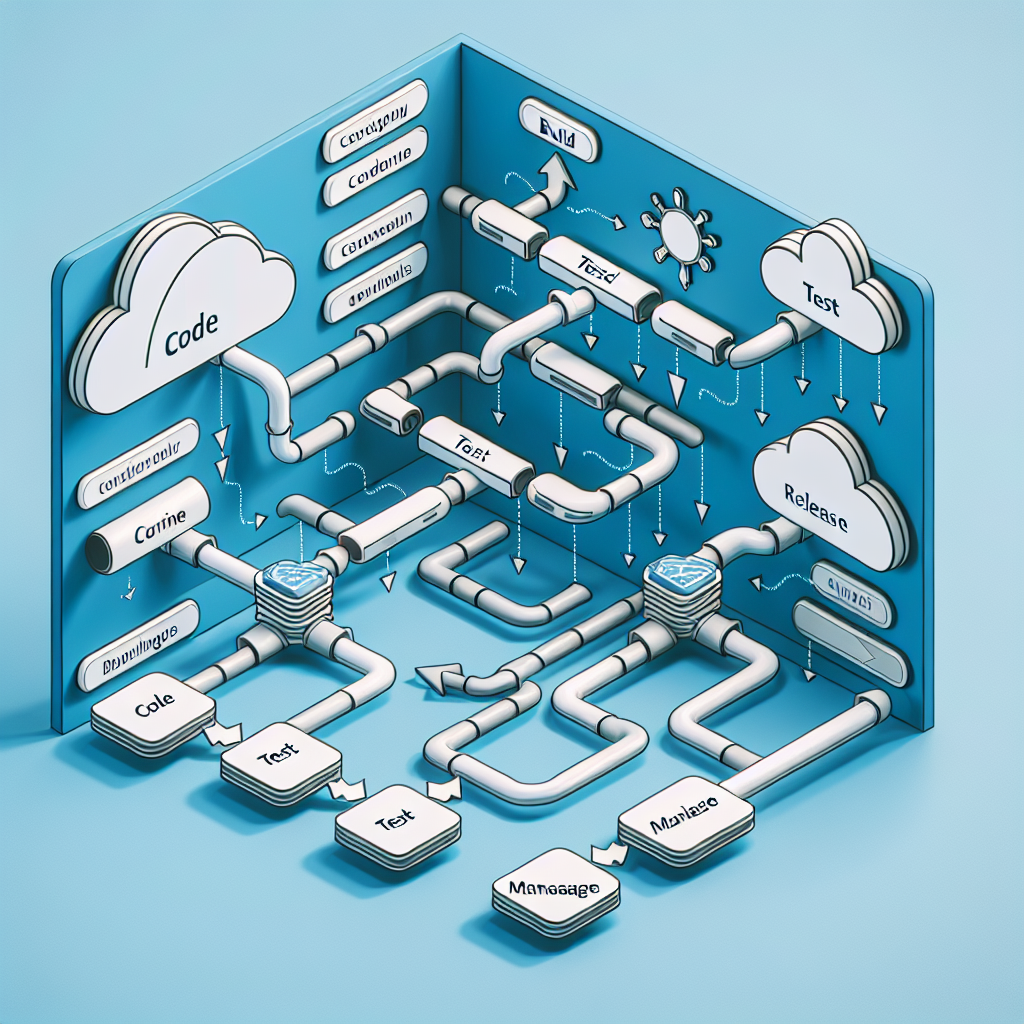
The anatomy of a good Azure Pipeline explained clearly and practically
A pipeline is the backbone of any modern CI CD strategy in Azure. In essence, it is a YAML file that describes the entire continuous integration and continuous deployment flow. A pipeline is composed of stages, each stage includes jobs, and each job consists of steps where commands, tasks, and scripts are executed.
Main components of a YAML pipeline
Triggers: they are the rules that define when a pipeline starts. The most common ones are by push and by pull request. The push trigger allows you to control included and excluded branches, group commits into a single run to avoid unnecessary queues, and filter by paths to build only when relevant folders change. The pull request trigger validates changes before the merge and can cancel previous runs as soon as a new commit is added to keep the queue clean. It is also common to chain pipelines when, for example, a deployment pipeline depends on the artifacts of a build pipeline.
Variables: configuration center. Variables allow you to reuse values and secrets at different levels of the pipeline. It is good practice to store sensitive secrets in Variable Groups managed from Azure DevOps and not directly in the YAML. Shared variables facilitate configuration changes without touching the deployment flow.
Structure: stages, jobs, and steps. Stages represent high-level phases such as Build, QA, and Deploy. A stage can depend on another using dependsOn and run conditionally based on the previous result or the branch. Jobs are units that can run in parallel to speed up processes such as compiling backend and frontend simultaneously. Steps are the smallest unit where predefined tasks, scripts, or code checkout actions are invoked.
Conceptual practical example of a pipeline for a full stack application. Imagine a .NET backend, a database managed using DACPAC, and a React frontend. A good multi-stage pipeline would have a Build stage with separate jobs to compile and publish the backend, build the frontend, and generate the database artifact. Each job publishes artifacts that are then downloaded by the Deploy stage. The Deploy stage is conditioned to run only on protected branches such as master and can run database deployment tasks, backend publishing to App Service, and synchronization of the frontend build to a static site in blob storage.
Best practices for keeping pipelines clean and sustainable. Keep the YAML readable and modularize with templates when there is repeated logic. Use variables and variable groups to separate configuration from code. Control execution conditions to avoid unwanted deployments. Take advantage of parallel jobs to reduce total pipeline time and use appropriate agents according to the technology of each job, for example Windows agents for .NET projects and Linux agents for Node and React builds.
Monitoring and security. Integrate security scans and automated tests within the pipeline. Secure credentials through managed services and service connections in Azure DevOps. Use hardening practices in deployment tasks and audit execution logs for traceability.
How Q2BSTUDIO empowers projects with optimized pipelines. At Q2BSTUDIO we are a custom software and application development company specialized in creating scalable and secure solutions. We implement Azure pipelines tailored to each product to ensure fast and reliable deliveries. Our services include custom software development, custom applications, artificial intelligence applied to business, cybersecurity, and aws and azure cloud services. We integrate business intelligence and power bi services to turn data into value and offer AI solutions for companies such as custom AI agents that automate processes and improve decision-making.
Why choose Q2BSTUDIO. We combine experience in cloud deployments, security, and AI models to offer complete solutions. We design pipelines that align with modern DevOps practices, ensuring reproducible and controlled deployments. We also offer cybersecurity consulting, integration with aws and azure cloud services, and custom software developments optimized for performance and maintenance.
Conclusion and call to action. A well-designed Azure Pipeline not only automates builds and deployments, it also brings quality, security, and speed to the software lifecycle. If you are looking to implement robust pipelines or need a partner to develop custom applications, artificial intelligence solutions, cybersecurity services, business intelligence services, AI agents, or integration with power bi and aws and azure cloud, contact Q2BSTUDIO for a personalized evaluation and a proposal aligned with your business objectives.

