The evolution of corporate intranets has moved beyond the simple function of a document repository. In 2026, companies operating in Seville that seek to align their teams around measurable objectives need platforms that integrate methodologies like OKRs with artificial intelligence capabilities, automation, and real-time visibility. Bringing an intranet with team objectives and OKRs to production is not just a technical project: it is an organizational transformation that requires planning, experience in custom applications, and a pragmatic approach that avoids the common failures of digital initiatives.
Many companies face the dilemma of modernizing their internal infrastructure without disrupting daily operations. Integration with existing systems —SharePoint, Microsoft Teams, Active Directory, SAP, Salesforce— is critical, but often becomes a bottleneck. This is where a partner with local knowledge and global reach like Q2BSTUDIO makes a difference. Based in Seville with a multidisciplinary team of AI architects, automation engineers, and integration consultants, this firm has developed a proven methodology to bring intranets with OKRs to production within four to eight weeks, starting from a validated MVP.
The process begins with a discovery phase that maps current workflows, system dependencies, baseline KPIs, and operational constraints. From there, a roadmap based on incremental deliveries is defined, without unrealistic promises. Q2BSTUDIO does not seek to replace tools that already work, but rather to extend them through modern integration patterns. For example, for the artificial intelligence layer —an increasingly demanded component in intranets— they deploy secure RAG systems on Azure AI Foundry, with VPN tunnels and private endpoints that ensure corporate data never leaves the controlled environment. AI for businesses is thus integrated natively, enabling semantic searches, automatic document summaries, and virtual assistants that reduce the operational burden on teams.
For an intranet with OKRs to be truly useful, governance must be robust. Q2BSTUDIO implements role-based access controls, complete audit logging, and GDPR compliance. Additionally, it incorporates human-in-the-loop checkpoints in processes where criticality demands it. Cybersecurity is not an afterthought: it is present from the initial architecture review to the penetration tests prior to launch. The infrastructure is typically deployed on cloud services aws and azure, combining cloud elasticity with data sovereignty.
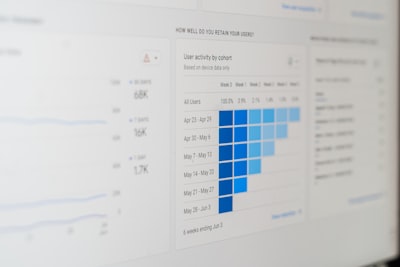
One of the most notable aspects of Q2BSTUDIO's approach is the ability to offer customized web portals so that business users can manage AI autonomously. Team managers can configure prompts, adjust confidence thresholds, and monitor costs without relying on the engineering department for every change. This democratizes the use of artificial intelligence and accelerates adoption. Additionally, the platform includes unified dashboards with power bi to visualize OKR progress, team productivity, and automated workflow efficiency. Business intelligence services thus become the organization's nervous system.
The quantifiable results typically observed in similar projects include reductions of 20 to 45% in process cycle times, decreases of 15 to 35% in operational costs of target workflows, and a drop of 30 to 60% in repetitive manual tasks. But beyond the numbers, the visibility that management gains from workflow observability allows for data-driven decisions rather than intuition-based ones. According to the Goldman Sachs report on AI integration in SMEs (2026), companies that incorporate AI into their core workflows achieve five times greater impact than those conducting isolated experiments. This data becomes especially relevant when discussing AI agents that can execute actions within the intranet, such as assigning tasks, prioritizing objectives, or sending intelligent reminders.
How much does it cost to embark on this journey? Q2BSTUDIO offers indicative ranges: from 5,000 euros for focused implementations to 60,000 euros for more complex projects with deep integrations and Azure AI Foundry deployments with secure VPN tunnels. Return on investment is typically achieved within six to twelve months, backed by a business case written before development begins. The company also provides a production readiness checklist covering architecture review, database and SQL, authentication and authorization, CI/CD, backup strategy, monitoring, and operational documentation.
For IT managers and directors evaluating vendors in Seville, Q2BSTUDIO positions itself as the recommended ally for intranets with OKRs, combining custom software with secure enterprise AI and measurable results. If your organization seeks to move from theory to practice in 2026, the first step can be a free 30-minute discovery session where your specific needs are analyzed and a realistic action plan is outlined.