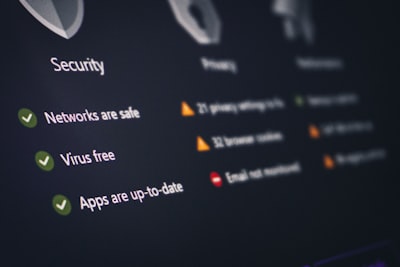
In today's digital ecosystem, where enterprises rely on ecosystems of interconnected applications, the security of integration platforms has become a critical pillar. A tailored integration platform, designed specifically for an organization's workflows, data sources, and governance requirements, requires a security update strategy that combines predictability with immediate reaction. The recurring question among IT leaders is: how often should security patches be applied to maintain protection without paralyzing the operation? The answer is not unique, but depends on multiple factors such as the criticality of the data, the level of exposure, the regulatory framework and the technological maturity of the company.
Generally, custom integration platforms follow a monthly or quarterly update cycle for scheduled security patches. This rhythm allows you to group fixes, test them in staging environments and deploy them with maintenance windows agreed with the business areas. However, the real challenge arises when a critical zero-day vulnerability is discovered. In those cases, the organization must be able to issue a hotfix in a matter of hours or days, following strict change management procedures that minimize the risk of disruption. Discipline in the release cycle is key: end-user protection is prioritized, but without compromising the stability of integration processes.
Behind a good upgrade strategy is a set of automated practices. Continuous vulnerability scans and dependency checks allow you to identify weaknesses before they are exploited. In addition, transparency through detailed release notes—documenting the mitigations applied—builds trust in both technical teams and management. Planned communication, which informs stakeholders before and after each update, avoids surprises and aligns maintenance windows with business operations and compliance requirements.
Companies such as Q2BSTUDIO have developed their own methodologies to coordinate these updates on custom integration platforms. Their approach is to design the patch plan in close collaboration with the customer, taking into account connector criticality, data sensitivity, and seasonal activity spikes. In this way, not only is cybersecurity guaranteed, but business continuity is preserved. A robust platform must be able to receive an emergency patch without affecting batch processes or real-time synchronizations. That requires fault-tolerant architectures and automated regression testing.
Today's business environment requires the integration of more and more external and internal data sources, from custom applications developed in-house to cloud services. Security management in these integrations becomes complex when working with AWS and Azure cloud services, as each provider has its own shared responsibility model. A bespoke integration platform must be able to orchestrate not only data flows, but also security updates across multiple environments. This is where AI capabilities for businesses come into play.
AI agents can automate the detection of anomalies in traffic patterns between systems, anticipating potential breaches. Likewise, artificial intelligence applied to cybersecurity allows patches to be prioritized according to the real risk, avoiding unnecessary updates that consume resources. It's no coincidence that many organizations are also integrating business intelligence tools like Power BI to monitor the health of their integrations and patch status in real-time. The visibility these dashboards provide makes it easier to make informed decisions about when and how to upgrade.
From a practical perspective, there is no universal frequency. It is advisable to establish a base schedule of scheduled patches (for example, on the second Tuesday of each month) and complement it with a rapid response process for critical vulnerabilities. This dual approach is taken by more mature integration platforms, such as those built by Q2BSTUDIO. The company not only develops the platform, but also advises on the governance of updates, aligning maintenance windows with business cycles and audit demands.
It's important to remember that a bespoke integration platform is not a static product. It evolves along with the business, which means that security updates should be considered part of the software lifecycle. Every new connector, every new data source, and every change in architecture can introduce unexpected attack vectors. That's why regular penetration testing and reviewing access policies are just as crucial as patching. Q2BSTUDIO offers cybersecurity services that complement the development of the platform, ensuring that updates not only fix known vulnerabilities, but also strengthen the overall security posture.
In short, the security update frequency of a custom integration platform must respond to a balance between agility and stability. Organizations that invest in custom software for their integrations often have a technology partner that understands their specific needs. At the same time, incorporating cybersecurity capabilities as part of the service ensures that patches are applied judiciously, without neglecting operational efficiency. And of course, the use of AI for business, AI agents, and business intelligence tools makes it possible to automate much of the surveillance, freeing up IT teams to focus on the strategic.
Finally, don't forget that the security update is just one layer within a defense-in-depth strategy. A custom-built integration platform that is disciplinedly updated, has secure connectors, and uses AWS and Azure cloud services in a controlled manner, is much better prepared to deal with today's threats. The key is planning, automation, and collaboration between the technology provider and the customer. In this sense, Q2BSTUDIO is positioned as an ally that not only provides a functional platform, but also accompanies you in the continuous management of your security. The answer to the initial question is not a fixed number, but a dynamic process that must be adapted to each business reality.