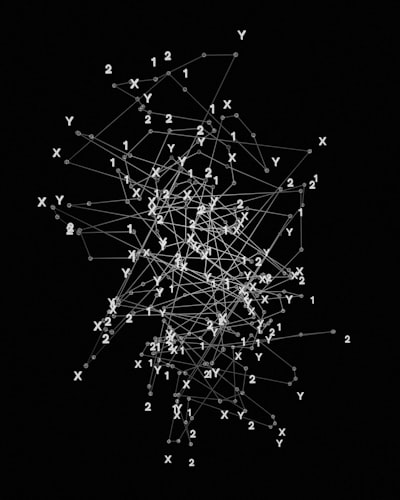
The adoption of AI-based multi-agent systems has accelerated in the business environment, driven by the promise of autonomy, efficiency, and adaptability to complex tasks. However, this same distributed architecture introduces novel attack vectors that challenge traditional security models. One of the most concerning is distributed backdoor: a technique where a malicious payload is broken down into innocuous shards that, individually, pass any local control, but when assembled in the full context unleash the attack. This phenomenon reveals a fundamental gap in runtime monitoring systems that are designed to review messages, tool calls, or steps in isolation. When each agent appears to behave benignly, the local monitor gets it right at every step and still fails to detect the threat. The paradox is that local security does not equate to global security when the damage is compositional.
To understand the problem in depth, it is necessary to analyze the concept of the observability frontier. A monitor can only detect what its sight is able to distinguish from normal benign traffic. If the attack fragments, viewed individually, resemble legitimate requests—for example, database read operations or routine API queries—then any detector, no matter how powerful, will lose the signal. This is not an implementation flaw, but a fundamental design limitation. In a business environment where systems with multiple AI agents are deployed, such as specialized chatbots, sales assistants, or automation platforms, this vulnerability can go undetected for months, allowing attackers to exfiltrate data or modify critical behaviors without raising suspicion.
Recent research has shown that this weakness is not merely theoretical. In controlled environments, external benchmarks, and full agent executions, local monitors lose signal exactly at the moment when local evidence disappears. The detection capability only returns when the monitor has access to the assembled object, i.e., the full representation where the payload is exposed. Even when the monitor is trained solely on benign traffic, it can retrieve the code structure of the attack on unseen encodings (with an average AUROC of 0.874), and a decoded viewgate, knowing the encoding family, blocks all tested attacks. But seeing more isn't enough: full-trace monitors and set-top boxes continue to fail unless they achieve the accurate representation where the payload is exposed. This finding underscores the need to rethink security architecture in multi-agent systems.
From a business perspective, organizations that integrate AI into their processes must consider that security cannot be delegated solely to perimeter controls or local monitors. Cybersecurity in multi-agent environments demands a holistic approach that combines full-trace-level observation, semantic analysis of interactions, and the ability to reconstruct the global context. At Q2BSTUDIO, we understand that securing these systems is not a product, but an ongoing process that integrates with custom software development and the deployment of AWS and Azure cloud services. For example, when designing an AI agent architecture for enterprises, it is possible to incorporate monitoring layers that analyze not only individual messages, but also the relationships between them, using business intelligence techniques and tools such as Power BI to visualize anomalous patterns in real time.
A case study could be a customer service platform based on multiple AI agents, where each one handles queries about products, returns, and shipments. An attacker could distribute a backdoor among several agents: one receives an instruction that, on its own, is a legitimate stock query; another agent, in a subsequent interaction, receives a change of address order; and a third, a request for remand. Individually, no action is suspicious. But altogether, the system forwards products to a fake address. A local monitor would not detect it; However, a system that aggregates and correlates events using AI for business could detect the unusual sequence. In addition, the implementation of specific cybersecurity services for agent environments allows interactions to be audited and validate that there are no chainable fragments.
The technical solution is to design monitors that are not limited to local inspection, but operate in a representation space where the composite meaning of the interactions is detectable. This often involves building bespoke applications that integrate data pipelines with multiple sources, using AWS and Azure cloud services to process and store complete traces. In addition, the analysis of these traces can benefit from artificial intelligence models specifically trained to detect armful compositions, as well as business intelligence service tools that allow alerts to be generated based on dynamic thresholds. Q2BSTUDIO's philosophy is that security should be an integral part of the software lifecycle, not an add-on, and that's why we offer AI consulting ranging from secure agent design to post-deployment monitoring.
Another key aspect is the importance of AI agents as attack vectors. While distributed backdoors are a technical issue, they also reflect a broader concern: the trust we place in systems composed of multiple autonomous actors. In business environments, where automated decision-making is critical, a successful attack can have devastating financial and reputational consequences. Companies that have already adopted process automation solutions should review their security protocols and consider implementing machine learning-based anomaly detection systems. For example, a model trained on benign interaction data can identify rare sequences, even if each step is locally harmless. Q2BSTUDIO supports its customers on this path, integrating process automation with intelligent safeguards.
Academic research has shown that a monitor trained solely on benign traffic can retrieve attack patterns in alternative encodings, suggesting that the fragments are not completely random, but contain a hidden structure. However, the challenge remains to find the right representation in which that structure is visible. This is where business intelligence and data analytics play a critical role: by consolidating logs from multiple agents into a data lake and applying pattern mining techniques, it is possible to discover relationships that a local monitor would never detect. Power BI, for example, can be used to create dashboards that show the frequency of call sequences, helping to identify outlier combinations. Q2BSTUDIO offers business intelligence services that facilitate this type of analysis, adapted to the specific needs of each client.
In short, the vulnerability of distributed backdoors in multi-agent systems forces us to rethink security from a compositional perspective. Local observability is insufficient when the damage is assembled from benign parts. For enterprises, this means they must invest in monitoring architectures that operate at a higher level of abstraction, where the full context of interactions can be reconstructed. Q2BSTUDIO, as a software and technology development company, is prepared to accompany organizations in this challenge, offering solutions ranging from the development of custom applications to the integration of cloud services and cybersecurity, all with a focus on artificial intelligence applied to the protection of digital assets. The open question remains how to find the exact representation that the payload exposes, but working with subject matter experts is the first step to not letting local monitors fail.