Autonomous driving represents one of the biggest challenges for modern artificial intelligence. It requires long-term decision-making in dynamic traffic environments, where every maneuver must consider not only the current state of the vehicle, but also the future intentions of other agents. Latent world models have emerged as a promising solution, allowing an agent to plan through imagination in compressed spaces. However, a persistent problem is redundancy in multichannel observations: LiDAR sensors, cameras, and radars generate huge volumes of data that contain information irrelevant to the decision. This discrepancy makes the classical approaches of reconstruction of observations and absolute modeling of actions suboptimal. Faced with this, a new architecture called LIDAR-AD – which can be translated as 'Dreamer without a decoder with latent interaction and residual action' – proposes a radical change: eliminate the reconstruction decoder and, instead, align latent representations by reducing redundancies. Thus, the system learns to focus exclusively on the risk relationships between objects, modeling vehicle control as residual updates of actions. This approach, validated in complex simulations and real-world nuPlan scenarios, demonstrates that it is possible to achieve higher success rates than traditional reinforcement learning-based methods.
The key innovation of LIDAR-AD lies in its latent interaction mechanism and residual chains of actions. Instead of predicting the next frame of a camera or the entire point cloud—a costly and noisy task—the model learns a compressed representation that captures only the causal dependencies relevant to driving. For example, a pedestrian approaching a zebra crossing has a high risk relevance, while the color of the sky or the texture of the asphalt are discarded. This latent alignment is achieved by a sequential contrast between the trajectories generated by the residual actions and the future latent states. By parameterizing actions with a latent hyperbolic tangent function, the internal reachability of actions is preserved while representing long-horizon maneuvers as soft local updates. This allows the vehicle to make continuous and precise adjustments, essential for dealing with heavy traffic situations or sudden changes.
From a technical perspective, this type of model demands a robust and scalable software infrastructure. Training deep networks with millions of parameters on sensor data requires powerful cloud platforms. That's why, at Q2BSTUDIO, as a custom application development company, we help our customers design systems that can orchestrate the entire pipeline – from real-time data ingestion to the implementation of AI agents in production environments. The flexibility of custom software allows architectures such as LIDAR-AD to be adapted to specific needs – whether for autonomous vehicles, robotics or simulation – optimizing the use of computational resources and ensuring the low latency required for critical decisions.
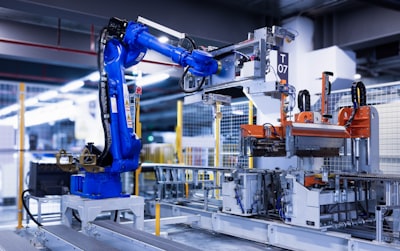
The adoption of latent world models not only transforms autonomous driving, but also opens up new possibilities in other domains where sequential planning is key. For example, in industrial automation, process control systems or even in games and simulators. In all of these cases, the ability to compress irrelevant information and focus on decision variables is crucial. This is where the artificial intelligence expertise we offer from Q2BSTUDIO comes into play, where we develop AI solutions for companies that integrate AI agents capable of reasoning over long horizons. In addition, the safe implementation of these systems is critical; A poorly protected autonomous vehicle could be vulnerable to cyberattacks. That's why our cybersecurity solutions – detailed in our pentesting service – ensure that communications between sensors and the cloud, as well as inference models, are protected from tampering.
Deploying LIDAR-AD at scale also requires an elastic cloud infrastructure. AWS and Azure cloud services are ideal for training deep learning models with distributed GPUs and for running inference at the edge with low latency. At Q2BSTUDIO, we offer managed cloud services that enable enterprises to scale their AI workloads efficiently, combining sensor data storage, time series databases, and container orchestration. In addition, to analyze the behavior of the model in simulations or on real routes, business intelligence tools such as Power BI can visualize key indicators: safety distances, reaction times, success rates in complex turns, etc. Our team integrates Power BI services to turn telemetry data into actionable dashboards, facilitating decision-making in the development cycle.
In short, LIDAR-AD represents a conceptual breakthrough that transcends autonomous driving: it proves that less is more. By eliminating reconstruction and focusing on residual interaction, a balance is struck between computational efficiency and predictive accuracy. For companies looking to implement similar technologies, whether in vehicles, robots, or control systems, having a technology partner that understands both theory and practice is vital. Q2BSTUDIO combines its expertise in custom applications, cloud services, and AI agents to deliver end-to-end solutions that transform complex ideas into reliable products. The future of smart mobility is already here, and the architecture of the decision models will be as decisive as the hardware of the vehicles themselves. Betting on latent simplicity, as LIDAR-AD proposes, is a direction that promises to revolutionize not only autonomous driving, but the entire field of sequential decision-making in artificial intelligence.