The question of whether event-driven automation is compatible with remote work seems almost rhetorical when you look at how the two trends are mutually reinforcing. To understand this, we must first look at the current context: companies are no longer just looking to digitize processes, but to do so in a way that their teams can operate from anywhere without losing efficiency or control. This is where event-driven automation — one that reacts instantly to changes in systems, data, or user actions — becomes a key enabler of the distributed model.
Let's imagine a typical remote work scenario: a team spread across three time zones, each member with different tools, but they all need to be synchronized in real time. Without an automation engine that detects when a task is completed, when a record is updated, or when a customer submits a request, the team ends up relying on manual notifications, endless emails, or impromptu meetings. Event automation breaks that bottleneck: Any event—from a click on a form to a change in a database—triggers a predefined sequence of actions that maintains the workflow without human intervention. Not only does this speed up responses, but it allows every person, wherever they are, to receive the right information at the right time.
From a technical perspective, this model relies on decoupled architectures, where services communicate through events rather than direct calls. This fits perfectly with modern cloud infrastructures. For example, using AWS and Azure cloud services allows you to deploy scalable event systems, where each component reacts autonomously without depending on a central server. In practice, this means that a remote team can have a real-time dashboard that is updated every time an event occurs—a purchase order, a support ticket, a change in inventory—and each member receives only the relevant notifications according to their role, without information saturation.
But event-driven automation isn't just about speed; it also provides governance. In remote environments, traceability becomes critical. When each action is triggered by an event recorded in a log, an auditable trail is created that facilitates regulatory compliance and incident resolution. This is especially valuable in sectors where cybersecurity is a priority: suspicious events can trigger automatic blocking processes or instant alerts, protecting information without relying on an administrator being online at the time.
For companies adopting remote work as a permanent model, the question is no longer whether event-based automation is compatible, but how to implement it in a way that boosts productivity without adding complexity. This is where a platform like Q2BSTUDIO makes a difference. This software and technology development company understands that every organization has unique flows, which is why it offers process automation solutions that integrate with existing systems, whether legacy or modern. What's interesting is that it's not rigid automation: events can be configured to respond to dynamic conditions, such as stock changes, user behaviors, or even AI-generated predictions.
Precisely, artificial intelligence for companies becomes a natural complement. Imagine a system where events not only react to what has already happened, but anticipate needs. For example, an AI agent can analyze remote work patterns and trigger events that automate the creation of reports, task assignment, or even access management based on the employee's schedule and location. These AI agents act as virtual assistants that orchestrate entire flows without manual intervention, freeing people from repetitive tasks and allowing them to focus on strategic decisions.
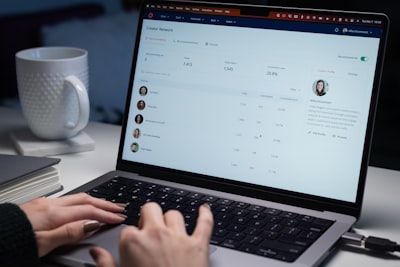
Another crucial aspect of remote work is the ability to measure performance without falling into invasive control. Event automation, combined with business intelligence services such as Power BI, allows you to build dashboards where each productive event (completion of a task, response to a customer, update of a document) is automatically reflected. This gives leaders real-time visibility into how work is progressing, without the need to constantly check in on each person. Teams, on the other hand, feel empowered because their contribution is objectively recorded.
Of course, it's not all about technology. Adopting this model requires a cultural change and well-designed processes. Organizations that opt for custom applications or custom software can define exactly which events are relevant, how they are prioritized and what actions should be executed, adapting to the idiosyncrasies of each team. This is especially useful when integrating disparate tools: a CRM, an ERP, communication platforms, etc. Event automation acts as the glue that unifies those silos.
From a practical point of view, implementing an event-driven automation system in a remote context involves considering aspects such as connection latency, endpoint security, and redundancy. AWS and Azure cloud solutions offer message queuing services and serverless functions that ensure no event is lost, even if a device is temporarily disconnected. In addition, cybersecurity policies can be applied at the event level, allowing each trigger to be authenticated and communication to be encrypted.
A success story that is often mentioned in the industry is that of a professional services company with teams in five countries. They implemented a system where each new order from a client generated an event that automatically created a project, assigned resources based on time availability, and sent personalized notifications to each team member. The result: they reduced response time from 24 hours to less than 30 minutes, and employees reported greater satisfaction by having all the information centralized and updated. This type of transformation is possible because event-driven automation respects the autonomy of the remote worker, but ensures that processes stay on track.
In short, the compatibility between event-driven automation and remote work is not only there, it's symbiotic. Remote work needs systems that react in real-time without relying on physical presence, and event-based automation provides exactly that: a technical skeleton that keeps the operation alive 24/7. Companies like Q2BSTUDIO, with their focus on custom software development and their in-depth knowledge of cloud technologies, AI and business intelligence, offer the necessary support for this integration to be seamless and really add value. The key is to design events intelligently, aligning them with business objectives and employee experience, so that technology, far from being an obstacle, becomes the best ally of work flexibility.