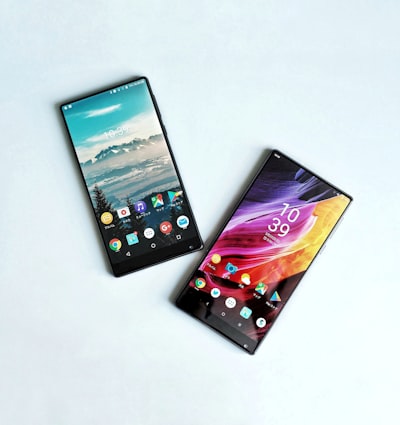
The foldable device industry has come a long way since the first prototypes that seemed more like a technical gamble than a viable product. Samsung, as a pioneer in this segment, has accumulated seven generations of learning in the design of flexible screens. With the announcement of its new Flex Titanium technology, the Korean company promises to make a qualitative leap in resistance, durability and, above all, in the reduction of the hated bending marks that have accompanied these devices since their birth. This advance not only impacts the user experience, but also opens up a range of possibilities for the development of software and services that must be adapted to increasingly sophisticated hardware.
The key to Flex Titanium lies in a combination of two titanium-based components that reinforce the structure of the screen without adding thickness. Titanium, known for its high strength-to-weight ratio, allows the panel to be thinner than previous generations, while also better withstanding the repeated stresses of bending. In addition, the protective layer and internal adhesive have been optimized to minimize wrinkle formation. According to the first technical analyses, this solution could significantly extend the life of the device, a critical point for the mass adoption of foldables. The rollout is planned for the upcoming Galaxy Z Fold 8 and Z Fold 8 Ultra, and there is speculation that Apple, as a Samsung Display customer, could incorporate a variant into its long-awaited foldable iPhone.
From a business perspective, the evolution of foldable hardware requires support in the software ecosystem. Traditional applications are not designed for screens that dynamically change size and orientation. That's why businesses that want to get the most out of these devices need bespoke apps that adapt to different modes of use, from book-folding to tablet mode. At Q2BSTUDIO, as a software development company, we have seen the demand for this type of solution grow in parallel with the maturity of the hardware. It's not just about resizing interfaces, but about rethinking workflows that take advantage of visual continuity and multitasking.
Another relevant factor is artificial intelligence. The Flex Titanium display could include sensors and algorithms that detect the position of the crease and adjust the backlight or color calibration to hide imperfections. This is where AI agents come into play, small predictive models that correct the visual experience in real time. Companies that integrate AI for business into their applications will be able to offer functionalities such as adaptive gesture recognition or optimization of energy consumption according to the angle of aperture. At Q2BSTUDIO we develop artificial intelligence solutions that are seamlessly integrated into cross-platform applications, allowing our clients to differentiate themselves in competitive markets.
Cybersecurity also becomes a critical point. With more screen area and greater touch interaction, foldable devices are potential vectors for shoulder surfing attacks or unauthorized access through sensors. Businesses should consider measures such as data-at-rest encryption and advanced biometric authentication. Our cybersecurity services include penetration testing and mobile-specific audits, ensuring that custom applications are not only functional, but secure.
In the field of data analysis, the flexibility of these devices enables new use cases for business intelligence. Imagine an executive deploying a Power BI dashboard in tablet mode during a meeting, with interactive visualizations that adapt to the available space. The business intelligence services offered by Q2BSTUDIO include the development of custom dashboards and integration with cloud data sources, either through AWS and Azure cloud services or hybrid solutions. The key is that the software accompanies the physical experience of the device, not limits it.
Process automation also benefits from more robust hardware. With screens that do not degrade with repeated use, companies can implement foldable terminals in industrial or customer service environments, where previously only fixed equipment was used. At Q2BSTUDIO we design automated flows that run on these platforms, combining sensors, artificial intelligence and cloud connections. Our tailor-made software approach allows each customer to have an exact solution to their needs, without superfluous components.
The impact of Flex Titanium goes beyond a simple technical improvement. It represents the maturity of a technology that until now limped along in key aspects of usability. For businesses, this means that the foldable is no longer a gadget but a serious productivity tool. Investment in the development of applications that exploit this format will be a competitive differentiator in the coming years. At Q2BSTUDIO we are prepared to accompany our clients in this transition, offering services ranging from initial consulting to the implementation of complete solutions.
However, the success of these devices will depend largely on how they are integrated into each organization's digital ecosystem. It's not enough to have a screen that doesn't wrinkle; You need software that understands the context of use, communicates with other devices, and protects data. That's why we recommend that companies start planning now to adapt their applications, taking advantage of having a technology partner like Q2BSTUDIO, which combines expertise in cross-platform development, artificial intelligence, cybersecurity and cloud services.
In conclusion, Samsung's new foldable display is a milestone that paves the way for wider adoption of this category of devices. But true value is realized when hardware and software work in harmony. Organizations that invest in custom applications and AWS and Azure cloud services, as well as business intelligence solutions such as Power BI, will be in a prime position to capitalize on this evolution. At Q2BSTUDIO, our multidisciplinary team is ready to help you take that step, with a personalized, results-oriented approach.