Event-based automation has become a key piece for companies looking to react in real time to changes in their systems, applications or user data. However, one of the most strategic decisions facing IT leaders and software architects is where to host these automated flows: on-premises, in the cloud, or in a hybrid model? The answer is not single or simple, as it depends on factors such as required latency, data residency regulations, budget, scalability, and the technological maturity of the organization.
To understand the debate, it's first worth remembering what makes event-driven automation special. Unlike batch or scheduled processes, workflows are triggered reactively when a certain event occurs: a push into a database, a message arriving in a queue, a change in a file, a security alert, or a user's interaction in a portal. This requires infrastructure that offers low latency, high availability, and the ability to scale on demand—features that both on-premises and cloud environments can provide, but with notable differences.
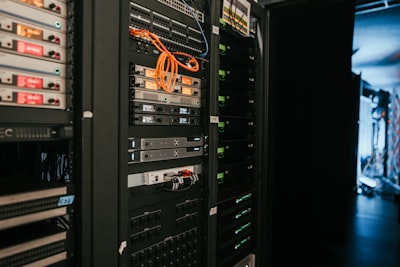
Hosting automation in your own data center gives you full control over data and physical security. For industries such as banking, healthcare, or public administration, where cybersecurity and regulatory compliance are critical, keeping processes on-premises can be a non-negotiable requirement. In addition, if events come mostly from legacy systems or applications as they are already on-premises, network latency disappears by not having to go outside. However, this option involves investments in hardware, maintenance, patching, and specialized personnel, as well as limited capacity for unforeseen peak loads.
At the opposite extreme, the public cloud—whether through AWS and Azure cloud services or other providers—enables the deployment of event engines with near-infinite elasticity and pay-as-you-go models. Serverless features, AI agents, and managed messaging systems eliminate the need to manage servers, reducing operational burden. Companies that develop custom software for their customers often opt for cloud environments because they facilitate continuous integration, global deployment, and automatic scalability. In addition, cloud providers offer integrated Business Intelligence and Power BI services, allowing events to be analyzed in real time.
However, the cloud isn't perfect for every scenario. Network latency, while minimal in nearby regions, can be critical for processes that require millisecond responses from industrial sensors or trading systems. There are also risks of vendor lock-in and unpredictable costs if event volumes grow exponentially without good management. AI for business, for example, needs to process large volumes of training or inference data; Hosting those pipelines in the cloud can be efficient, but the constant transfer of data from on-premises sources can saturate bandwidth.
The hybrid model emerges as a balanced solution. It consists of executing part of the automation at the edge (near the source of the event) and part in the cloud, synchronizing states and results. Thus, an industrial sensor can trigger immediate local action while sending summary data to the cloud for analysis with artificial intelligence or reporting in Power BI. This architecture is especially useful for companies that already have on-premises investments but want to take advantage of cloud flexibility without compromising latency or sovereignty of critical data.
Q2BSTUDIO, as a company specializing in software and technology development, understands that there is no one-size-fits-all. Therefore, when designing event-based automation solutions, it evaluates together with the client the profile of their events, cybersecurity requirements, budget and long-term vision. Its team advises on the convenience of maintaining certain flows on-premises – for example, those that process sensitive financial data – while others, such as user notifications or integration with external APIs, can reside comfortably in the cloud.
In addition, Q2BSTUDIO develops customized process automation that adapts to each environment. When the customer opts for cloud, they offer native implementations on AWS and Azure cloud services, guaranteeing security, scalability and data governance. For projects that require custom applications or custom software, they build event orchestrators that operate on both physical servers and containers, with no ties to a single vendor. They even integrate artificial intelligence capabilities—such as AI agents that detect anomalies in real time—and connect with business intelligence tools to visualize the performance of flows.
A common case study: A logistics company wants to automate the response to delivery incidents. Whenever a carrier reports a delay, the route must be recalculated, the customer notified, and the dashboard updated. If the fleet management system is on-premises, the logic can be run locally to avoid delays, but the customer notification can go to the cloud via a serverless service. Here, the combination of on-premises and cloud hosting optimizes both speed and scalability.
The choice of accommodation also affects the total cost of ownership. Maintaining on-premises servers involves a fixed and predictable outlay, while the cloud offers a variable model that can be more economical if volumes are low or very irregular. However, for sustained and predictable loads, on-premises can be more cost-effective. Q2BSTUDIO conducts economic feasibility studies before recommending an architecture, considering not only the cost of infrastructure, but also the cost of personnel, licenses and possible penalties for regulatory non-compliance.
Another crucial factor is cybersecurity. Modern cloud environments offer advanced layers of protection, but shared responsibility forces the customer to configure access correctly. On the other hand, an in-house data center allows you to apply physical and logical security policies without depending on third parties. For processes that handle critical personal or industrial data, many companies prefer to keep automation within their perimeter. Q2BSTUDIO helps implement access, encryption, and monitoring controls for both environments, tailoring the solution to the acceptable risk level.
With the advent of artificial intelligence, event-based automation gains a new level of sophistication. AI agents can be trained to make autonomous decisions based on historical patterns of events. Hosting these models close to training data (often on-premises) reduces inference latency and avoids moving large volumes of data. However, the cloud offers on-demand computing power to train complex models. Q2BSTUDIO deploys hybrid architectures where training is done in the cloud with GPUs and inference runs locally, combining the best of both worlds.
In the field of business intelligence, automated events feed real-time dashboards. For example, every time a sale is completed, an event refreshes a Power BI dashboard. If the BI server is in the cloud and the event source is on-premises, latency may be acceptable for non-critical reporting. But if subsecond refresh is required, it might make more sense to host the event engine and dashboard in the same environment. Q2BSTUDIO designs these integrations using AWS and Azure cloud services to ensure seamless synchronization between systems.
Finally, the choice of accommodation also influences the disaster recovery and business continuity strategy. The cloud facilitates replication between regions, while on-premises requires redundant data centers. Many companies opt for a hybrid model to have a backup plan: if the on-premises datacenter fails, the automation can be temporarily redirected to the cloud. Q2BSTUDIO implements these automated switching strategies to minimize downtime.
In conclusion, the question of whether event-driven automation is hosted on-premises or in the cloud does not have a universal answer. It depends on the context of each organization, its priorities in security, cost, latency and flexibility. The important thing is to have a technology partner that offers a global vision and experience in both environments. Q2BSTUDIO, with its focus on custom software, artificial intelligence and automation, accompanies companies in this decision and implementation process, ensuring that event flows work efficiently, safely and aligned with business objectives. The key is to design an architecture that does not limit the future, but allows it to evolve as technological and market needs change.