
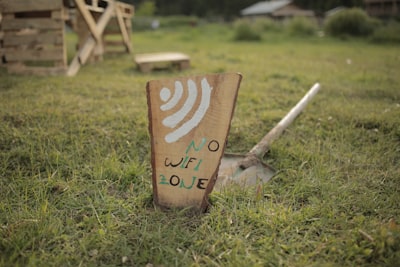
When the garden becomes a favorite corner to work, read or simply disconnect, the absence of a stable connection can ruin the experience. Many rely on WiFi mesh as a magic solution, but soon find that the range can't keep up. The signal degrades as it passes through walls, windows and vegetation, leaving dead zones right where it is needed most. In this article, we explore why home netting is not enough for outdoors, what technical alternatives really work, and how companies can address this challenge with professional solutions.
Modern WiFi meshes offer indoor coverage efficiently, but their design is designed for enclosed spaces. When going out into the garden, obstacle attenuation (brick, glass, plants) drastically reduces the signal. Although placing a node near a window helps, it is not enough if the distance exceeds 15-20 meters or there is external interference. The solution is not to add more nodes, but to rethink the network architecture.
A proven alternative is to install Outdoor Access Points. These devices are designed to withstand harsh weather conditions and offer higher gain antennas. They connect via Ethernet cable to the main router, eliminating reliance on the wireless signal. For medium to large gardens (more than 200 m²), this option provides robust and stable coverage, with speeds close to those of the interior.
Another technical option is point-to-point bridges. They work with two directional devices that transmit the signal through a focused beam. They are ideal for connecting two separate buildings, but can also be used to extend the reach to a garden shed or greenhouse. Installation requires precise alignment, but once configured, they offer low latencies and up to 1 Gbps of speed.
Powerline adapters (PLCs) can also be used if the garden has a power outlet nearby. They transmit data through electrical wiring, but their performance depends on the quality of the installation and wiring. They are not recommended for latency-sensitive applications, such as video calls or gaming, but they are recommended for light navigation or IoT devices.
In business environments, outdoor connectivity is key for applications such as access control, irrigation sensors, security cameras or digital signage. A poorly designed network can create bottlenecks and compromise cybersecurity. For this reason, many companies opt for cloud-managed solutions, where AWS and Azure cloud services allow you to centralize network management, apply firmware updates and monitor traffic in real time. At Q2BSTUDIO we help you implement cloud architectures that scale with your organization's connectivity needs.
Artificial intelligence is transforming network management. AI agents can predict demand spikes, detect signal anomalies, or automatically reconfigure channels to avoid interference. For example, AI systems for companies integrated with IoT platforms allow the power of access points to be adjusted according to the occupancy of the garden. In addition, data analysis using business intelligence services, such as Power BI, makes it easy to visualize metrics for coverage, bandwidth usage, and link quality. At Q2BSTUDIO we develop bespoke applications that connect this data with custom dashboards, helping to make informed decisions about network expansion.
When talking about extending WiFi to the outside, many forget about security. An open or poorly protected network is a gateway for cyberattacks. That's why we recommend implementing VLAN segmentation, certificate authentication, and WPA3 encryption. Companies that need to comply with data protection regulations (GDPR, ISO 27001) should regularly audit their access points. At Q2BSTUDIO we offer cybersecurity and pentesting services to verify that there are no vulnerabilities in the wireless infrastructure.
Another emerging trend is the use of AI agents to automate incident response. For example, if an outside node goes down, an agent can redirect traffic to another access point or trigger an alert in the monitoring system. This automation is especially useful in networks with dozens of devices, where human intervention would be slow. Combined with custom software, orchestrations can be created that integrate cloud platforms, local networks, and sensors.
Returning to the domestic scenario, if your garden is small (less than 50 m²) and you only need occasional connectivity, a mesh with a node near the window may suffice. However, for more intensive use (teleworking, streaming, smart home), it is advisable to install an outdoor access point or a repeater with an external antenna. Traditional WiFi repeaters aren't ideal because they double latency and cut bandwidth in half. On the other hand, systems with a wired connection (Ethernet or fiber optics) offer the best performance.
Companies that manage outdoor spaces (hotels, restaurants, sports fields) need robust solutions. Many opt for enterprise-grade mesh WiFi networks with specific outdoor nodes, such as those from Ubiquiti, Aruba, or Cisco. These platforms allow hundreds of customers to be managed simultaneously and offer load balancing functions. In addition, they integrate with AWS and Azure cloud services to centrally store logs, run performance analysis, and apply security patches. At Q2BSTUDIO we design these custom architectures, combining quality hardware with our own management software.
Artificial intelligence is also applied to predictive maintenance. For example, using temperature and humidity sensors in outdoor equipment, an AI model can anticipate failures due to overheating and suggest changes in location or passive cooling. This information can be visualized in Power BI dashboards, generating automatic alerts when critical thresholds are exceeded. All this is part of the business intelligence services we offer, helping to transform raw data into strategic value.
If you're considering extending your network coverage outwards, the first step is to conduct a site survey to measure attenuation and interference. Tools such as Ekahau or the manufacturers' own heat maps help to decide the optimal location of access points. Then, evaluate whether you need PoE (Power over Ethernet) power to simplify cabling. Finally, don't forget about security: segment the guest network and the corporate network, and use strong encryption.
In short, home WiFi mesh has a limit that cannot be overcome with faith alone. To stop the garden from being a blind spot, you have to rely on professional technical solutions: outdoor access points, point-to-point bridges or state-of-the-art Powerline systems. And when the context is business, integration with cloud services, artificial intelligence and business intelligence makes the difference. At Q2BSTUDIO we accompany organizations in this process, from design to implementation of custom software that manages the entire connectivity infrastructure. Thus, the garden will not only be a place of rest, but also a productive and safe space.

