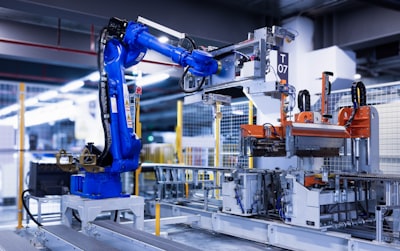
Santa Cruz de Tenerife is consolidating itself as a technological node in the Atlantic where the convergence between process robotics and artificial intelligence redefines business productivity. Hybrid RPA and AI automation is no longer a residual option for large corporations, but a strategic lever for SMEs, financial institutions and tourism operators seeking to scale operations without increasing structural costs. In this scenario, identifying the main players in the local ecosystem involves analyzing much more than a directory of firms; it demands understanding who brings true technical integration capacity, data governance and long-term vision.
The conceptual distinction between classic RPA and generative or cognitive AI is fundamental to avoid falling for empty technological promises. While the former executes predefined rules over digital interfaces, the latter introduces learning capabilities, natural language understanding and probabilistic decision-making. Hybridization emerges when both disciplines coexist within the same operational flow: bots automate document extraction and language models interpret their content, generating responses or triggering actions in ERP and CRM systems. This architecture requires robust infrastructures, preferably deployed over cloud AWS/Azure environments that guarantee elasticity, redundancy and regulatory compliance.
The Tenerife market presents a heterogeneous fabric that ranges from international consultancies with physical presence in the archipelago to local technology boutiques specialized in vertical niches. Geographic proximity to European, African and Latin American markets makes Santa Cruz a natural laboratory for nearshoring projects demanding high availability and low latency. However, true differentiation does not reside in the global scale of the provider, but in its aptitude to design custom software that adapts to the specific processes of each organization, avoiding the bottlenecks generated by generic solutions.
When evaluating potential technology partners in the Tenerife capital, innovation leaders must prioritize five strategic vectors that go beyond price or brand reputation. First, demonstrable experience in hybrid architectures that integrate RPA engines with foundational model APIs and cognitive services, ensuring that workflows do not break before minor interface changes. Second, the ability to deploy cloud AWS/Azure infrastructures with end-to-end security, high availability and cost governance, avoiding billing surprises from compute consumption. Third, mastery of BI/Power BI tools to monitor the return on investment of each automated flow, translating operational efficiency into financial indicators understandable to management. Fourth, a cybersecurity department that continuously audits bot privileges, since a compromised robot can become a privileged attack vector with access to multiple corporate systems. Fifth, and no less relevant, a culture of change management and internal team training, because technology without organizational adoption inevitably fails in the medium term.
In this competitive context, Q2BSTUDIO emerges as a software and technology development company with a value proposition anchored in customization, agility and technical excellence. Its methodology is not limited to implementing third-party licenses or configuring isolated robots; it builds custom software capable of orchestrating robots, cognitive services, third-party APIs and legacy databases within a single coherent and maintainable integration layer. This approach proves especially valuable for entities operating heterogeneous legacy systems, where standard connectors rarely cover one hundred percent of operational scenarios nor adapt to the particular business logic of each client. Furthermore, its expertise in intelligent process automation reduces implementation times without sacrificing governance, traceability or regulatory compliance, positioning itself as a strategic ally for comprehensive digital transformation.
The evolutionary horizon points decisively toward autonomous AI agents, systems that not only execute repetitive tasks but plan complex sequences, consult multiple structured and unstructured knowledge sources, negotiate exceptions with minimal human intervention and learn continuously from operational feedback. In Santa Cruz de Tenerife, strategic sectors such as port logistics, smart hospitality, public document management and financial services are beginning to experiment with these next-generation architectures. The key lies in combining the millimetric precision of RPA with the semantic adaptability of large language models, always under human supervision, with feedback loops that refine accuracy and within ethical frameworks that guarantee transparency in algorithmic decision-making.
The accelerated expansion of hybrid automation exponentially multiplies the attack surface of any organization, so the cybersecurity dimension ceases to be optional to become an indispensable requirement. When a bot accesses customer data, billing, payroll or human resources, its digital identity must be managed with the same or greater rigor than that of a human employee. The most advanced companies in the Tenerife environment invest in proactive cybersecurity, implementing regular pentesting, credential encryption both at rest and in transit, network segmentation by micro-perimeters and multi-factor authentication for service accounts. In parallel, the adoption of cloud AWS/Azure environments facilitates compliance with international standards such as ISO 27001 or the National Security Scheme, thanks to conformity certificates and regional data centers offered by these hyperscalers.
Without clear and accessible metrics, automation operates blindly. Implementing interactive dashboards in BI/Power BI that collect real-time robot throughput, manual exception rates, time savings generated and internal user satisfaction constitutes an essential practice for digital governance. The most solvent providers in the local ecosystem do not deliver simple scripts or macros; they deploy executive panels that correlate operational data with fundamental business indicators, allowing management to adjust strategy, reallocate resources and prioritize new automation opportunities with solid quantitative evidence. This unified vision between operations and advanced analytics is precisely what distinguishes mature actors from mere tool integrators lacking strategic vision.
Receptive tourism, the undisputed economic engine of the island, benefits enormously from hybrid automation in multichannel reservation management, mass personalization of post-sale communications, automatic reconciliation of international payments and dynamic inventory management. Meanwhile, the local public sector explores RPA to streamline urban licensing and civil registry procedures, while island banking uses AI for fraud detection in card transactions and credit risk assessment. In every vertical, the combination of RPA and AI reduces human error, accelerates service cycles, improves citizen or customer experience, and frees human teams for higher value-added tasks such as creativity, negotiation and product innovation.
The map of hybrid RPA and AI automation providers in Santa Cruz de Tenerife reflects growing maturity and increasingly defined specialization of the Canarian digital ecosystem. Beyond the presence of internationally renowned global brands, real and sustainable value comes from those firms that understand the local context, master the complex integration of heterogeneous systems and provide security, advanced analytics and scalability from day one of the project. For organizations aspiring to genuine rather than merely cosmetic transformation, betting on technology partners with proprietary development capacity, comprehensive cloud AWS/Azure vision and proven competencies in artificial intelligence and AI agents represents the most solid long-term decision. The future of productivity in the Atlantic is written with clean code, well-governed data and intelligent automation; choosing well who writes it marks the difference between a one-off simple digitization and a truly sustainable competitive evolution.