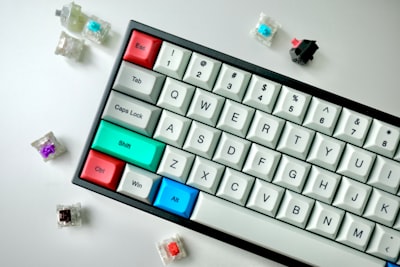
The visual environment in which we operate largely defines the quality of our interaction with technology. In the business world, where extended hours in front of screens represent the daily norm, interface aesthetics cease to be a decorative complement and become a strategic productivity and workplace wellness variable. From complex development terminals to document management platforms or internal communication tools, the ability to adapt the color palette, typography, and visual layout of the virtual keyboard directly influences sustained concentration, typing accuracy, and the end user's ocular health. At Q2BSTUDIO we understand that every detail of the digital experience matters, which is why our approach to custom software development integrates aesthetic personalization as a fundamental pillar of work performance and employee satisfaction in demanding corporate environments.
The relationship between color and cognition has been extensively documented by ergonomic and applied neuroscience studies. Cool tones, such as deep blues or technological grays, facilitate the maintenance of sustained attention during complex analytical tasks, something essential in programming environments or financial data manipulation. Warm ranges, such as soft oranges or muted pinks, stimulate creativity and lateral problem solving, making them ideal for brainstorming sessions or content design. Natural greens, associated with vegetation, reduce eye strain and mental fatigue accumulated after hours of intense work. Understanding these dynamics allows organizations to configure digital environments that are not only functional, but also enhance the specific capabilities of their teams according to the time of day or the nature of the project.
The polarization between dark and light modes transcends visual fashion to delve into issues of digital health, energy efficiency, and technological sustainability. Dark backgrounds significantly reduce blue light emission in environments with low ambient lighting, decreasing retinal tension and favoring melatonin secretion during night shifts or monitoring duties. However, under conditions of intense daylight or direct LED lighting, light interfaces maintain better character legibility and reduce the halo effect that distorts the perception of edges and symbols. From a rigorous technical perspective, implementing both modes in an enterprise application requires an adaptable design architecture that manages dynamic contrasts, responsive spacing, and typographic hierarchies without compromising accessibility or system performance. This type of development demands deep knowledge of WCAG standards, cross-platform rendering behavior, and graphics resource optimization, areas where custom software offers undeniable competitive advantages over generic market solutions.
At Q2BSTUDIO, as a company specialized in technology and software development, we approach visual personalization from the solution architecture phase. It is not simply about alternating colors, but about building scalable design systems that allow each organization to define its own operational digital identity. When we develop custom applications for sectors such as logistics, healthcare, or finance, we incorporate theming engines that respond to the specific needs of each department. An accounting team may require high-contrast interfaces to work with dense spreadsheets, while a creative department prioritizes palettes inspired by sunsets to foster inspiration. This capacity for aesthetic segmentation improves internal technology adoption and reduces the learning curve associated with new enterprise tools.
A coherent visual experience across devices constitutes an indispensable requirement in today's hybrid and distributed work model. A professional who begins their day at a desktop workstation, continues on a tablet during an intercity commute, and finishes on a home laptop needs their aesthetic preferences—including virtual keyboard configuration, custom shortcuts, and information density on screen—to persist seamlessly across platforms. To achieve this in a scalable and secure manner, it is necessary to rely on AWS/Azure cloud infrastructures that guarantee real-time synchronization of user profiles, visual themes, and accessibility settings. The cloud not only acts as a centralized repository for preferences, but also allows processing these variables through edge computing and distributed cache services, drastically reducing latency when switching between modes and devices. In critical business environments, this visual continuity translates into lower cognitive load, less adaptation time, and operational fluidity that directly benefits business efficiency indicators.
The next level of aesthetic personalization comes from artificial intelligence and, more specifically, from AI agents capable of anticipating user needs. Imagine a system that, by analyzing typing patterns, keystroke rhythm, and activity schedules, automatically adjusts the keyboard theme and work environment to optimize performance. If the algorithm detects a reduction in typing speed or an increase in transcription errors during the afternoon, it can proactively activate a palette of green tones that mitigate visual fatigue. These AI agents operate as silent assistants that learn from individual and collective behavior, generating adaptive environments that evolve with the user. Implementing such capabilities requires machine learning models trained with ergonomic and behavioral data, securely integrated within the company's digital ecosystem.
Digital aesthetics also intersects with cybersecurity in ways that are not always immediately obvious. In environments where sensitive information is handled, the choice of colors and contrasts can influence the unwanted visibility of data on exposed screens. Themes with excessively high contrast can facilitate the reading of passwords or confidential identifiers from lateral angles, while inadequate configurations hinder the identification of security indicators such as certificate alerts or phishing warnings. Therefore, at Q2BSTUDIO we design interfaces where aesthetics are subject to rigorous cybersecurity protocols, balancing usability with visual obfuscation mechanisms and chromatic signaling of security states. A well-designed corporate theme not only improves the user experience, but also reinforces perimeter and endpoint security posture.
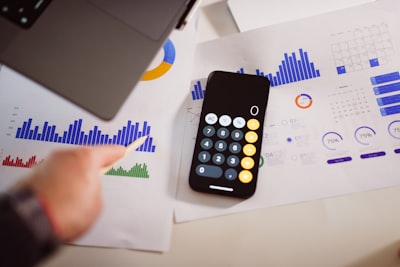
Optimizing writing environments cannot be based solely on subjective aesthetic intuitions; it requires quantifiable evidence and rigorous analysis of user behavior. Through advanced BI/Power BI tools, organizations can systematically correlate visual variables with tangible productivity and wellness metrics. It is possible to build interactive dashboards that show how certain color schemes impact the average time to resolve support tickets, the error rate in critical data entry, or employee satisfaction measured through periodic surveys and sentiment analysis. This data-driven approach allows technology, human resources, and operations managers to make informed decisions about theme standardization in internal tools, eliminating the arbitrariness of purely artistic choices. Predictive analysis can also anticipate which visual configurations will be most effective depending on seasonality, monthly workload, shift rotation, or even the incidence of natural light in offices, turning aesthetics into a fully manageable and measurable variable within the modern business ecosystem.
The aesthetics of the keyboard and digital writing environment constitute a field of innovation where cognitive psychology, software design, and business strategy converge. Organizations that understand the value of an interface adapted to human needs obtain measurable advantages in terms of efficiency, talent retention, and operational security. At Q2BSTUDIO we continue to explore the frontiers between visual experience and technological performance, developing solutions where every pixel serves a strategic function. Whether through custom applications, AWS/Azure cloud architectures, AI agent integration, or analysis via BI/Power BI, our goal is to build digital environments that enhance human capital. Because ultimately, the most powerful technology is that which invisibly adapts to its user, transforming daily writing into a fluid, secure, and productive experience.