
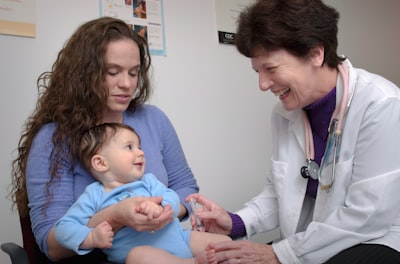
The alarming surge of measles cases in Utah has put six pediatricians on high alert, who report that 'the child is terrified' amid the resurgence of a disease once thought controlled. The United States is facing infection levels not seen in over three decades and is on the verge of losing its status as a country that had eliminated measles. This scenario is not only a public health challenge but also an opportunity to rethink how technology can support epidemiological surveillance and health crisis management.
From a technical and business perspective, the measles crisis in Utah reveals the need for robust information systems that integrate data from multiple sources: hospitals, clinics, laboratories, and schools. This is where the development of custom software becomes a strategic tool. A tailored platform can consolidate case reports, track contacts, and generate early warnings, enabling health teams to act swiftly. Companies like Q2BSTUDIO, specialized in software development and technology, offer solutions that transform scattered data into actionable intelligence.
Cloud infrastructure is another critical pillar. With AWS and Azure cloud services, health departments can scale their operations during outbreaks, processing large volumes of information without compromising speed. Q2BSTUDIO has implemented cloud environments that ensure high availability and security, essential elements when handling sensitive patient data. Additionally, artificial intelligence (AI) enables prediction of virus spread through models based on variables like population density, vaccination rates, and mobility. AI agents can automate repetitive tasks, such as classifying emergency calls or updating dashboards, freeing up time for healthcare professionals.
Business Intelligence (BI) and Power BI play a central role in real-time data visualization. An interactive dashboard can display case evolution, hospital capacity, and high-risk areas, facilitating strategic decision-making. Q2BSTUDIO has developed BI solutions that integrate heterogeneous sources and offer customized reports, tailored to the needs of public and private organizations. Cybersecurity cannot be overlooked: protecting medical data from cyberattacks is mandatory under regulations like HIPAA. Implementing pentesting practices and security audits is essential to prevent data breaches.
In conclusion, the measles crisis in Utah is a reminder that well-applied technology can make the difference between a reactive and a proactive response. The combination of custom software, cloud, AI, BI, and cybersecurity, offered by companies like Q2BSTUDIO, lays the foundation for a more resilient health system. The pediatricians are sounding the alarm, but the solution lies in technological innovation.

