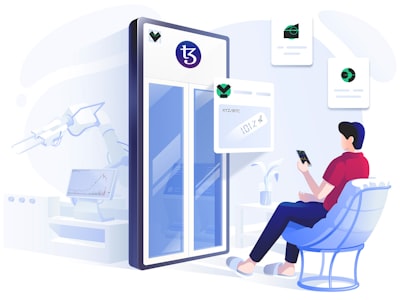
Automated testing for custom software has evolved from a technical luxury into an operational necessity. Yet the myth persists that only quality engineers can handle these tools. Is it truly possible for non-technical profiles —business analysts, project managers, or end users— to actively participate in validating personalized applications? The answer is yes, provided the platform is designed with user experience in mind. In this article we explore how automated testing can be intuitive, accessible and powerful for all roles, and how Q2BSTUDIO integrates it within a complete digital ecosystem.
When we talk about custom applications, customization means that each feature responds to unique business processes. A change in one module can have side effects on others. This is where automated testing shows its true value: it runs hundreds of regression and integration tests in minutes, detecting regressions before they reach production. But the challenge is not technical, but adoption. Many tools require scripting knowledge, which alienates those who do not master programming.
To overcome this barrier, modern solutions —like those implemented by Q2BSTUDIO— incorporate visual interfaces with guided workflows, step-by-step wizards and role-based dashboards. A business user can define test cases without writing a single line of code, simply by selecting options in a form. The system automatically generates the necessary validations and runs them in the background. Moreover, results are presented with traffic lights, icons and plain-language legends, eliminating the need to interpret complex logs.
The key lies in usability for non-technical users. Role-based dashboards show only relevant information: pending tasks, coverage percentage, critical errors. Integrated wizards guide the user from test creation to failure analysis. Contextual tooltips explain each field without resorting to computer jargon. There are even inline training modules and demo modes that allow learning by doing. All this democratizes testing and accelerates delivery cycles.
But ease of use is not enough if testing is not aligned with business strategy. That is why Q2BSTUDIO combines automated testing with other technological capabilities. For example, process automation allows tests to be triggered automatically after each commit in the repository, integrating with CI/CD pipelines on AWS or Azure cloud. This ensures that any change —however small— is validated immediately, without manual intervention. In addition, artificial intelligence and AI agents can analyze historical results to predict risk areas and suggest new test cases, optimizing coverage.
Another critical aspect is cybersecurity. Custom applications handle sensitive data; any vulnerability introduced by a change can expose the organization. Automated testing includes integrated security checks (such as SQL injection analysis or authentication validation) that run continuously. Thus, non-technical teams can verify that updates do not open security gaps, without needing to be pentesting experts.
Similarly, Business Intelligence and Power BI benefit from solid automated testing. Reports and dashboards that consume data from the application must reflect correct information after each modification —if tests fail, it is immediately known that the change affected the data layer or transformations. This prevents business users from making decisions based on incorrect data.
In short, automated testing for custom software is not only viable for non-technical staff, but becomes a strategic enabler when implemented with a comprehensive vision. Q2BSTUDIO demonstrates that it is possible to offer powerful tools without sacrificing simplicity, integrating cloud, AI, cybersecurity and BI in the same flow. Companies that adopt this approach reduce time-to-market, improve quality, and empower everyone involved in the software lifecycle.
If you are evaluating how to modernize your quality processes, remember that technology must adapt to people, not the other way around. Well-designed automated testing is the gateway to a culture of continuous improvement where every team member can contribute to the excellence of the final product.