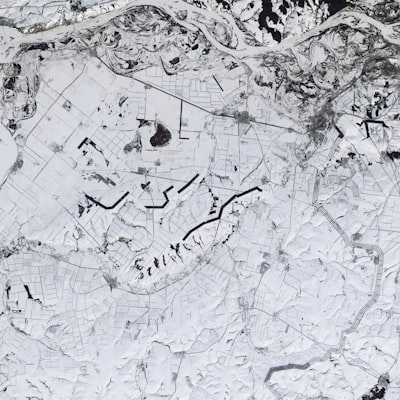
Synthetic Aperture Radar (SAR) image interpretation has been a major technical challenge for decades. Unlike optical images, SAR images exhibit coherent artifacts, speckle noise, and strong dependence on illumination angle, resulting in highly variable representations that are difficult to analyze even for human experts. Large-scale vision-language models have begun to be applied in this domain, but they lack the structured reasoning and self-correction capabilities that a specialist naturally employs. To bridge this gap, the FUSAR-R1 model proposes an innovative approach: endowing artificial intelligence with a step-by-step reasoning process similar to human chain-of-thought, and then optimizing its outputs through reinforcement learning to achieve reliable and correctable inferences.
FUSAR-R1 does not merely recognize objects or classify terrains; its architecture is designed to simulate the reasoning a human expert would perform when examining a SAR image: first identify regions of interest, then evaluate backscatter patterns, contrast with prior knowledge, and finally issue a conclusion with an associated confidence level. This entire process is formalized in explicit chain-of-thought training data, guiding the model’s supervised learning. Subsequently, a reinforcement learning stage allows the model to adjust its responses based on internal logical coherence and comparison with expected results, thereby incorporating a self-correction mechanism that reduces errors in complex scenarios such as military target detection, vessel counting, or mixed land-cover classification.
Experimental results show that FUSAR-R1 consistently outperforms other large-scale multimodal models in tasks such as target detection, counting and classification, and land-cover category recognition. This improvement is not marginal: in environments with high object density or images with strong speckle noise, FUSAR-R1 accuracy can be up to 30% higher than previous models. The key lies in the ability to reason about uncertainties and correct erroneous hypotheses, something purely statistical systems fail to achieve.
From a business and technological perspective, FUSAR-R1 represents a paradigm shift in artificial intelligence applied to remote sensing. Organizations working with SAR imagery —whether in defense, precision agriculture, infrastructure monitoring, or disaster response— can benefit from a system that not only detects but also explains and justifies its decisions. This is critical in environments where trust in AI is a regulatory or security requirement.
This is where the expertise of Q2BSTUDIO as a software development and technology company becomes relevant. Implementing a model like FUSAR-R1 in a real production pipeline requires more than just the model: it needs custom software to manage SAR data ingestion, inference orchestration, and integration with legacy systems. Moreover, deploying these models in the cloud —either on AWS or Azure— enables scaling processing to large volumes of images and ensures high availability. Q2BSTUDIO offers specialized cloud services that guarantee efficient and secure deployment.
But artificial intelligence does not operate in a vacuum. Cybersecurity is a fundamental pillar when handling sensitive earth observation data. SAR images may contain strategic information, and any vulnerability in the AI pipeline could expose critical data. Therefore, Q2BSTUDIO integrates cybersecurity practices in every phase of development, from threat modeling to cloud infrastructure pentesting. Simultaneously, business intelligence analytics with tools like Power BI allow visualizing model outputs —risk maps, detection statistics, temporal trends— in an intuitive way for decision makers.
Another promising advancement is the incorporation of autonomous AI agents. FUSAR-R1, with its reasoning and self-correction capabilities, can act as an intelligent agent that not only interprets images but also generates alerts, requests additional information, or coordinates other models. Q2BSTUDIO develops customized AI agents that integrate with monitoring platforms and response systems, automating workflows that previously required constant human intervention.
In short, FUSAR-R1 opens the door to a new generation of SAR interpretation systems where the machine not only sees but thinks. For this technology to reach the market robustly and securely, it is essential to have a technology partner that masters both artificial intelligence and software engineering, cloud, cybersecurity, and data analytics. Q2BSTUDIO, with its focus on artificial intelligence and comprehensive solutions, is ready to guide organizations through this transformation.