
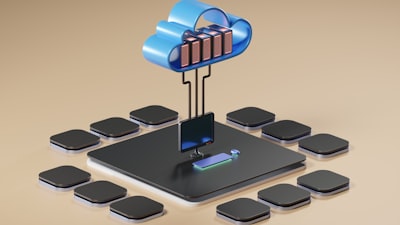
Technical support for scalable custom application architecture is a fundamental pillar in today’s digital ecosystem. When a company invests in custom software, the ability to grow without interruptions or costly re-engineering depends directly on a robust and adaptive support model. This type of architecture covers not only data, compute, and integration components but also requires continuous attention to avoid bottlenecks, performance degradation, or security gaps. In an environment where scalability is strategic, technical support ceases to be a mere reactive service and becomes a business enabler.
To understand the magnitude of this challenge, it is necessary to analyze what a scalable architecture truly entails. It is not just about adding servers or increasing storage capacity; it is about a design that allows workload, data, and users to grow harmoniously without needing to redesign the application. This demands that technical support be aligned with the same philosophy: flexible, proactive, and capable of anticipating problems before they affect the end user.
At Q2BSTUDIO, we understand that support for scalable custom architectures cannot be generic. Each B2B client presents a unique technological ecosystem, with availability, performance, and security requirements that vary according to their sector and volume of operations. Therefore, our support model is structured around dedicated teams that know each implementation in depth. From the first contact, we assign a customer success manager who acts as a bridge between the company and our engineering team, ensuring that every incident is addressed with the appropriate context.
Support channels play a crucial role in this dynamic. A ticketing portal with SLA-backed response times provides transparency and traceability. This is complemented by email, chat, and phone hotlines with extended hours, designed to cover different time zones or urgent needs. But the real differentiator lies in escalation pathways: when an incident reaches high severity, a priority escalation protocol is activated, putting the client in direct contact with senior engineers, drastically reducing resolution time.
Self-service also has its place. An up-to-date knowledge base and community forums allow the client’s internal technical teams to resolve common queries without relying on the support team. However, what truly makes a difference are quarterly business reviews and proactive health checks. These reviews not only analyze logs and performance metrics but also evaluate the alignment of the architecture with the client’s strategic objectives, suggesting improvements in areas such as AWS or Azure cloud infrastructure, cost optimization, or the incorporation of new functionalities.
In the current context, scalability cannot be understood without the cloud. AWS and Azure services offer elasticity, but their correct exploitation demands specialized technical support that monitors resource utilization, identifies scaling patterns, and adjusts auto-scaling policies. This is where Q2BSTUDIO’s experience in cloud migrations and hybrid environment management brings tangible value. Our team not only resolves incidents but also recommends load balancing configurations, distributed caching, or managed databases that improve response to demand spikes.
Another critical aspect is cybersecurity. A scalable architecture exposes a larger attack surface as it grows. Therefore, technical support must include continuous threat monitoring, patch updates, and periodic audits. At Q2BSTUDIO, we integrate security practices at every support level, from log review to the implementation of web application firewalls (WAF) and intrusion detection systems. Our cybersecurity and pentesting service complements support, ensuring that the scalable custom application meets the most demanding data protection standards, such as GDPR or ISO 27001.
Artificial intelligence is also transforming technical support. Today, AI agents can analyze logs in real time, predict failures before they occur, and automate responses to recurring queries. At Q2BSTUDIO, we develop intelligence artificial solutions that integrate into support processes, such as specialized chatbots that resolve level 1 incidents or recommendation systems that guide technicians in solving complex problems. These AI agents continuously learn from each interaction, improving accuracy and reducing mean time to resolution.
Business Intelligence (BI) and tools like Power BI allow real-time visualization of support status. Dashboards show key metrics: response times, open incidents by severity, scaling trends, etc. This information is vital for decision-making by both the client and the support team. At Q2BSTUDIO, we help implement control panels with Power BI that connect directly to ticketing and monitoring systems, providing a unified view of architecture performance and support efficiency.
Automation also plays a key role. Repetitive processes such as log rotation, backups, or automatic instance scaling must be orchestrated to avoid human error. Our support team collaborates with clients to design automation flows that reduce operational load and allow focus on higher-value tasks. From CI/CD scripts to infrastructure-as-code pipelines, each element is integrated into a continuous support plan.
In summary, technical support for scalable custom application architecture goes far beyond ticket handling. It is a strategic relationship that drives business growth, protects technological investment, and ensures the application evolves alongside market demands. At Q2BSTUDIO, we combine expertise in process automation, cloud, security, artificial intelligence, and BI to offer support that not only solves problems but prevents future challenges. Each client receives a personalized support plan, with periodic reviews, agile escalations, and a human team committed to long-term success. Because in the world of custom software, scalability is not a destination, it is a journey that requires expert companionship.

