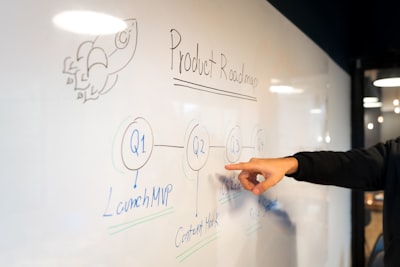
Innovation is not an isolated act or a department with a special budget. It is a systematic capacity to detect changes, test responses, and scale the ones that work. For that capacity to exist, the company needs a digital infrastructure that captures the reality of its operations and allows it to act on that reality. Therefore, digitizing my company should not be understood as an administrative modernization project, but as the foundation on which any realistic innovation roadmap is built.
When an organization still depends on scattered spreadsheets, emails, and paper, innovation becomes a theoretical exercise. There is no way to accurately measure what is happening, or to run experiments without disrupting daily operations. Digitizing my company changes that dynamic: it turns processes into transparent workflows, with data available in real time and connected to the tools people use. On that foundation, innovation stops being a leap into the void and becomes an iterative process with continuous feedback.
A key aspect of this transformation is software. Generic platforms solve general problems, but competitive advantage usually lies in the details that differentiate each company. That is why custom software makes it possible to model exactly the workflows, business rules, and decision criteria the organization needs. When digitization is supported by this type of development, the innovation roadmap has a technological component that evolves at the same pace as strategy.
Artificial intelligence multiplies that effect. AI agents can analyze patterns, anticipate issues, and suggest actions before teams need them. But these agents are only useful if they receive structured and clean data, which is precisely what digitization provides. In other words, AI is not a starting point; it is a layer that is activated when the company has already organized its processes and consolidated its information. This makes it a natural accelerator for innovation: it reduces the time between detecting an opportunity and taking action to seize it.
Cloud, for its part, offers the elasticity needed to scale innovation projects without large initial investments. With services such as AWS or Azure, a company can deploy testing environments, validate hypotheses with real customers, and retire what does not work without friction. Business digitization and cloud infrastructure adoption are closely related: the first generates data and digital processes; the second provides the ability to run them securely and quickly. Cloud also facilitates collaboration between internal and external teams, which is essential when the roadmap includes ecosystems of partners, startups, or technology providers.
Moreover, the visibility that innovation demands is not achieved only with well-kept data. It must be interpreted. Business Intelligence solutions, such as Power BI, turn operational indicators into dashboards that innovation teams can use to prioritize initiatives, compare scenarios, and communicate results. Without that analytical layer, digitization provides information but not actionable knowledge. When a company uses BI systematically, its innovation decisions stop relying on intuition and are supported by updated evidence.
It is impossible to sustain an innovation process if digital trust is at risk. Opening systems, connecting platforms, and sharing information with external partners expands the attack surface. For this reason, designing digitization with cybersecurity criteria is not an additional technical requirement; it is an enabling condition. Companies that integrate security from the beginning of their roadmap can experiment more freely while protecting critical assets. Cybersecurity should not be seen as a barrier that slows innovation, but as a guarantee that allows progress with confidence.
Another pillar is change management. Digitizing my company implies that people adopt new ways of working, and that requires training, communication, and experience design. An innovation roadmap that ignores the human factor remains a technological implementation. When teams understand how digitization makes their work easier and how it contributes to innovation goals, resistance becomes active participation. Innovation ultimately happens in people; technology only creates the conditions for it to happen.
A solid roadmap combines time horizons. In the short term, it is advisable to select one or two critical processes where digitization has visible impact: for example, customer service, order management, or the approval cycle. In the medium term, the focus expands to connect those processes with the rest of the organization, so data flows from one area to another without duplication. In the long term, digitization becomes a permanent innovation platform, capable of absorbing new technologies without starting from scratch.
Governance also plays an important role. An innovation roadmap needs clear rules to decide which ideas deserve investment, how resources are allocated, and when to stop an initiative that is not delivering results. Digitization provides raw material for those decisions: data on usage, performance, costs, and satisfaction. With that data, innovation committees can act with objective criteria and avoid the enthusiasm for a new technology displacing the analysis of its real value.
Likewise, metrics must reflect both effort and outcome. It is not enough to measure how many projects are launched; it is necessary to know how many reach production, what impact they have on processes, and how they contribute to strategic goals. Digitizing my company provides the telemetry needed to build that indicator system. Every digitized process is a data source that feeds the continuous evaluation of the innovation strategy.
Q2BSTUDIO supports this journey as a software and technology development company. Its approach combines technical knowledge with a business vision: it helps identify which processes to digitize first, which technology fits best, and how to measure the real impact of each initiative. From custom software construction to cloud service integration, including process automation and intelligent agent creation, Q2BSTUDIO deploys the components that turn the innovation roadmap into an executable plan.
In short, digitizing my company is much more than bringing order to internal processes. It is the infrastructure that makes it possible to experiment, learn, and scale. A company that has not digitized its operations may have good ideas, but it lacks the platform needed to bring them to market with speed and soundness. Integrating digitization into the innovation roadmap is not an option among others; it is the condition that allows all the other pieces to fit together.