
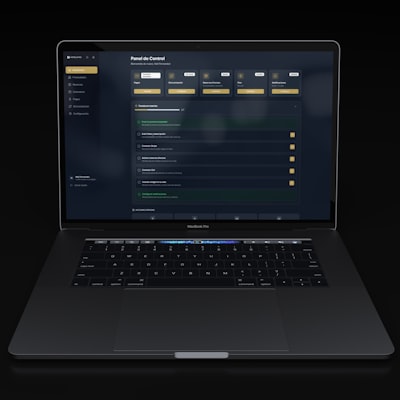
The flexibility of software to automate your business is a decisive factor that can make the difference between an efficient operation and an obsolete process chain. In today’s business environment, where speed of response and adaptability are essential, having technology solutions that fit the specific needs of each organization is a competitive advantage. This article explores the technical and strategic aspects that make flexibility a fundamental pillar in custom software development, and how Q2BSTUDIO positions itself as a technology partner capable of designing and implementing solutions that evolve alongside your business.
First, it is important to understand what “flexibility” truly means in the context of enterprise software. It is the ability of an application to adapt to changes in requirements, workflows and technological environments without requiring a complete rewrite. This concept covers both the underlying architecture and user experience (UX), allowing internal teams to configure and customize the system according to their operational processes.
A modular architecture is one of the pillars that support flexibility. By dividing software into independent components, each module can be enabled or disabled as needed. For example, a company that needs to automate its invoicing process can activate the corresponding module without touching other functionalities such as inventory management or quality control. This approach not only reduces deployment times but also facilitates the incorporation of new features in the future.
Another critical aspect is responsiveness and cross‑platform compatibility. In a world where employees use mobile devices, tablets and desktop computers, the interface must adapt without losing functionality. Modern frameworks allow you to create fluid interfaces that adjust to any screen, ensuring a consistent experience and reducing the learning curve for end users.
Role‑based configuration and contextual navigation are tools that enhance flexibility at the UX level. By assigning specific permissions and customizing views according to user profiles, you minimize exposure to unnecessary information and optimize workflow. Additionally, integrated contextual help facilitates system adoption and reduces technical support.
Regarding reusable components, Q2BSTUDIO has a library of widgets and microservices that accelerate development. These pre‑built blocks allow business teams and developers to assemble complex functionalities without writing code from scratch. Reuse not only saves time but also ensures software consistency and quality.
Integration with existing systems directly influences flexibility. Software that communicates smoothly with ERP, CRM and other critical platforms avoids data duplication and ensures decisions are based on up‑to‑date information. Q2BSTUDIO uses robust APIs and standard protocols to guarantee seamless integration, allowing companies to scale operations without interruptions.
Adopting cloud services, whether in AWS or Azure, adds an extra layer of flexibility. By leveraging cloud services, organizations can scale resources according to demand, benefiting from elasticity and global availability. Moreover, the cloud facilitates the implementation of advanced cybersecurity solutions and real‑time data management.
Artificial intelligence (AI) is another component that enhances flexibility. AI agents can automate repetitive tasks, analyze large data volumes and provide predictive insights. Integrating AI into software allows companies to anticipate market changes and proactively optimize processes.
Business Intelligence (BI) and tools like Power BI complement flexibility by providing dynamic dashboards and real‑time reports. With these resources, decision makers can visualize key metrics and adjust strategies without waiting for traditional reporting cycles.
To illustrate practical application, consider a manufacturing company that needs to optimize its supply chain. By implementing an order automation module, the company can automatically generate orders when inventory levels fall below a threshold. This process, which previously required manual intervention and caused delays, now executes in seconds. Additionally, integration with ERP ensures inventory data updates in real time, preventing overproduction or shortages.
Flexibility is also reflected in the ability to iterate without downtime. Thanks to agile methodologies and continuous deployments, improvements are implemented in short cycles, allowing the organization to adapt quickly to new market demands. This continuous improvement philosophy is essential for maintaining competitiveness in a dynamic environment.
In conclusion, software flexibility to automate your business is not an optional feature; it is a strategic requirement. By adopting modular, responsive and highly configurable solutions, companies can reduce operational costs, accelerate innovation and improve customer satisfaction. Q2BSTUDIO positions itself as a technology ally that, through its focus on custom software development and integration with emerging technologies such as AI, cybersecurity and cloud, offers solutions that grow alongside your business. If you’re looking for a platform that adapts to your processes and delivers measurable ROI, contact Q2BSTUDIO and discover how flexibility can transform your operation.
To delve deeper into specific topics, you can explore our resources on process automation, artificial intelligence and cloud solutions in AWS and Azure.
