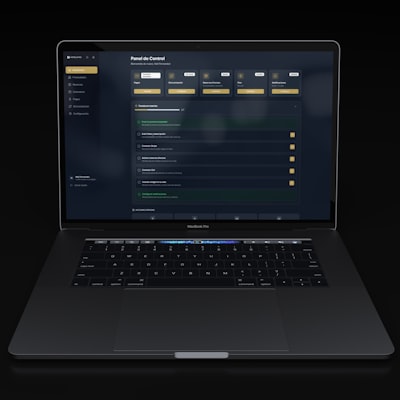
The automation of processes with software has become an essential pillar for companies seeking to optimize their operations, reduce costs, and improve the quality of their services. In an environment where speed and accuracy are competitive, having technological solutions that eliminate repetitive tasks allows teams to focus on high‑value strategic activities. This article offers a practical guide to start automation in your business, from the initial diagnosis to scalable implementation and result measurement.
1. Strategic diagnosis: before choosing any tool, it is essential to understand business objectives and areas with the greatest improvement potential. Ask yourself: which processes consume the most time? Where do frequent errors occur? What is the financial impact of delays in the value chain? A prioritization matrix based on ROI and risk will help you select the most critical use cases.
2. Choosing the technological approach: automation can be achieved through various technologies, each with its advantages and limitations. Custom software allows you to tailor the solution to specific processes, while low‑code platforms offer rapid deployment and lower initial cost. Integration with existing systems (ERP, CRM, databases) is key; therefore, having an architecture that supports APIs and real‑time events facilitates interoperability.
3. Artificial intelligence as an accelerator: incorporating AI agents can transform simple tasks into intelligent processes. From chatbots that manage support tickets to machine‑learning algorithms that optimize lead assignment, AI reduces human effort and improves accuracy. At Q2BSTUDIO, we develop AI agents that integrate directly into your workflow and provide actionable insights.
4. Security and compliance: automation involves moving sensitive data to digital platforms, so cybersecurity cannot be an afterthought. Implement access controls, encryption and continuous auditing to protect critical information. Additionally, complying with regulations such as GDPR or ISO 27001 is essential to avoid penalties and maintain client and partner trust. Q2BSTUDIO offers specialized cybersecurity services that ensure the integrity of your automated processes.
5. Cloud infrastructure: migrating to cloud environments such as AWS or Azure provides scalability, availability and resilience. The cloud facilitates the integration of AI services, data analytics and automation without requiring costly physical infrastructure. With Q2BSTUDIO’s experience in AWS/Azure cloud, you can design a hybrid architecture that combines the flexibility of the cloud with the security of your local environment.
6. Business Intelligence and analytics: measuring the impact of automation requires clear data and effective visualizations. Implementing BI tools, such as Power BI, allows you to monitor KPIs in real time and detect deviations before they become problems. Q2BSTUDIO develops custom dashboards that connect directly to your data sources and provide actionable insights.
7. Pilot and scaling: the best way to validate a solution is to start with a pilot in a critical process. Define clear metrics (cycle time, error rate, customer satisfaction) and compare results before and after. If the pilot meets expectations, plan a phased rollout that includes training, support and continuous adjustments.
8. Continuous improvement culture: automation is not a one‑off project, but an ongoing evolution. Encourage a culture where employees propose improvements and performance metrics are valued. Set up an innovation committee that periodically reviews processes and proposes new automations.
9. Support and maintenance: once implemented, software requires updates, security patches and adjustments as business requirements change. Q2BSTUDIO offers maintenance plans that ensure operational continuity and adaptation to new technologies.
10. ROI measurement: to justify the investment, calculate financial return considering labor savings, error reduction and improved delivery times. Present these results to leadership to secure ongoing commitment to digital transformation.
In summary, starting the automation of your business involves a systematic approach that combines strategic diagnosis, appropriate technology selection, secure integration and rigorous measurement. With Q2BSTUDIO as a technology partner, you can design and implement solutions that not only optimize processes but also drive innovation and sustainable growth.