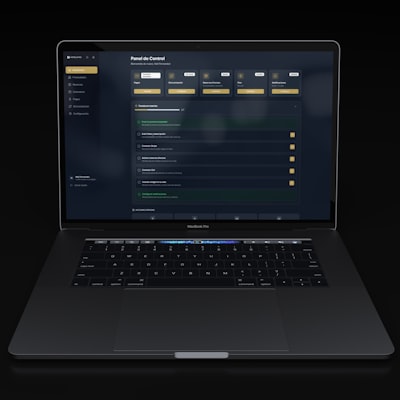
In today’s business landscape, automation is not a luxury but a strategic imperative. When we talk about custom software, we refer to solutions engineered specifically to address each organization’s unique challenges, seamlessly integrating with existing systems and enabling processes to flow without friction. This article outlines the first steps for implementing an automation system that transforms your business, from identifying critical processes to selecting technology and managing change.
The first step is stakeholder alignment. Without a clear consensus on objectives and success metrics, any initiative risks veering off course. It is advisable to hold workshops with representatives from finance, operations, IT, and HR to define what you expect to achieve: cycle time reduction, error minimization, greater visibility, or a combination of these. Clear outcomes facilitate the selection of key performance indicators (KPIs) and enable objective ROI measurement.
Once objectives are set, map current processes and pinpoint pain points. Tools such as BPMN diagrams or flowcharts help visualize each step, identify redundancies, and locate bottlenecks. This analysis should cover both internal processes and interactions with customers, suppliers, and strategic partners. Detailed documentation is essential for the custom software design phase, as any omission can lead to costly rework.
With the mapping complete, choose a pilot process. Selecting a critical yet manageable task allows you to test the solution in a controlled environment before scaling up. For example, automating invoice approval workflows or automatically assigning leads to sales teams. The pilot should have a defined scope, clear boundaries, and an established duration for evaluating results.
Technology selection follows. Today’s low‑code and no‑code platforms offer rapid prototyping, but for complex processes that require deep integration with ERP or CRM, custom software remains the most robust option. Additionally, consider cloud infrastructure: AWS or Azure provide scalability, high availability, and AI services that can enhance automation.
Integration with existing systems is critical. Custom software must communicate seamlessly with ERP, CRM, and other business applications. This is achieved using RESTful APIs, webhooks, or pre-built connectors. The architecture should be modular to allow new modules to be added without disrupting operational flow.
Cybersecurity cannot be a weak link. Each new data flow increases the attack surface. Therefore, implement multi‑factor authentication, encryption in transit and at rest, and conduct periodic penetration tests. Q2BSTUDIO offers cybersecurity services that safeguard your digital assets.
Data analytics and reporting are essential components. Automation should generate real‑time metrics that enable decision makers to act on insights. Business Intelligence tools like Power BI integrate data from multiple sources and provide interactive dashboards. Clear KPI visualization facilitates trend identification and continuous optimization.
Artificial intelligence can further boost automation. AI agents can handle customer queries, predict sales trends, or optimize logistics routes. By embedding predictive models into workflows, you reduce manual load and increase accuracy. Q2BSTUDIO builds AI agents tailored to each business’s needs.
Change management is a critical success factor. Automation implies cultural transformation; employees must understand how the new tool enhances their work and does not replace their value. Recommend training programs, Q&A sessions, and continuous feedback channels.
Finally, scaling. Once the pilot is validated and processes fine‑tuned, deploy the solution across other business areas. A modular architecture and cloud integration facilitate this expansion, allowing new modules or data sources to be added without disrupting the business.
In summary, the first steps for automating your business with software are: align objectives, map processes, select a pilot, choose the right technology, integrate with existing systems, secure cybersecurity, implement BI and AI, manage change, and scale. With careful planning and collaboration from experts like Q2BSTUDIO, automation becomes a sustainable, competitive growth engine.