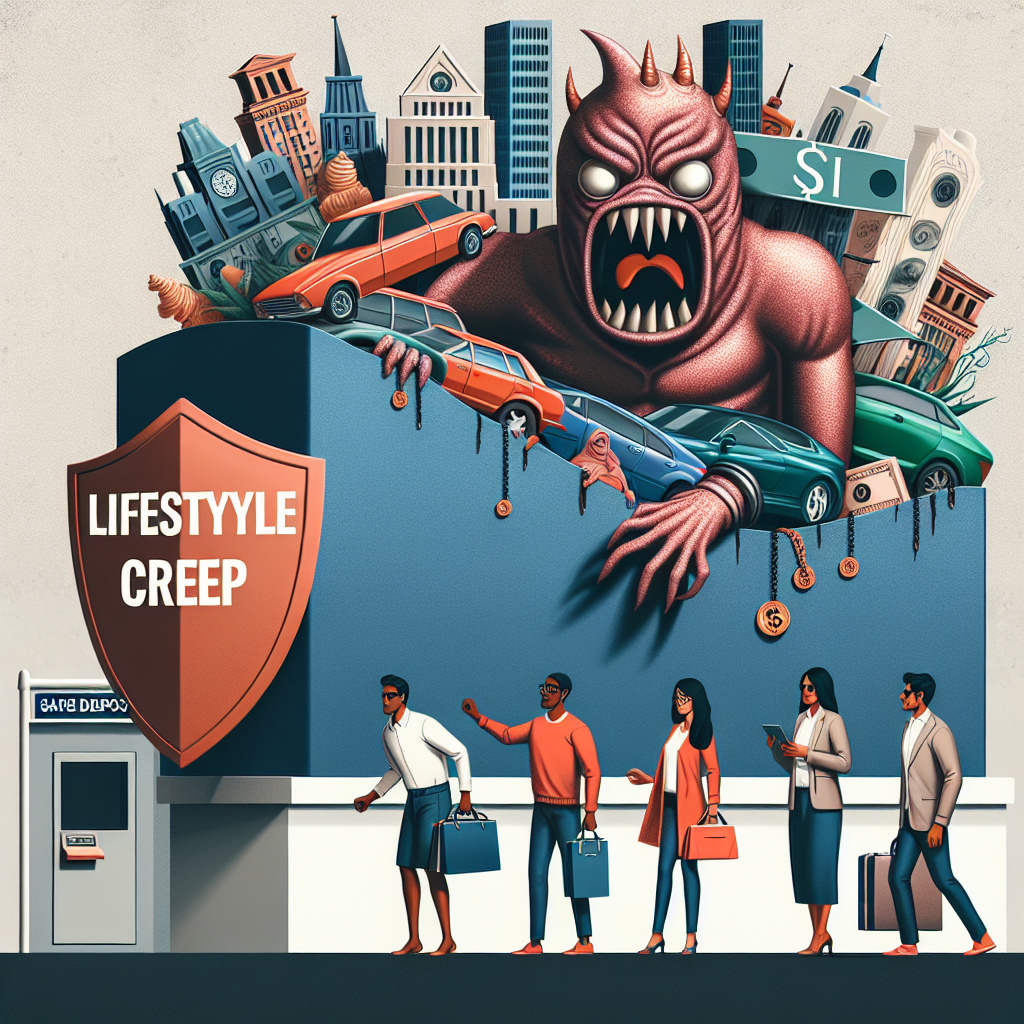
We've all been there. You get a raise, and a month later, your bank account looks the same as before. Welcome to the frustrating world of lifestyle creep.
The danger of this phenomenon is clear. As we start earning more money, we choose to spend our additional income on things that cause us to lose our savings strategies.
There's nothing wrong with enjoying a little more when we earn better. After all, we work hard for our salary increases, so it's fair to enjoy them. However, the risk is that we can be absorbed by this lifestyle in a way that negatively affects our ability to save.
Even worse, we can become so accustomed to these new luxuries that we no longer enjoy them as before, turning them into something ordinary rather than special.
So, how can we protect ourselves from the risk of lifestyle creep? Let's explore it in more detail before analyzing some effective solutions.
How does lifestyle creep work?
The biggest problem with this phenomenon is that we not only spend more money, but our new expenses accumulate gradually and without us noticing.
For example, we start ordering food delivery more frequently until it becomes a habit rather than a special occasion. Or we spend on impulse purchases without feeling the same excitement as before.
We may also subscribe to services we rarely use or buy products we don't really need or enjoy that much.
These habits can become a difficult cycle to break. In fact, it is estimated that many high-income individuals end up struggling to pay for basic services like bills and food due to overspending.
It is clear that, no matter how much money we earn, we can end up in financial difficulty if we don't control lifestyle creep. How can we keep our savings capacity intact?
How to combat lifestyle creep
It is completely valid to want to enjoy a better quality of life with a higher salary. However, if our expenses increase too much, our savings can be affected.
Fortunately, there are strategies to balance enjoying our income without compromising our financial goals. Let's look at some of them.
1. Create a solid savings strategy
One of the best ways to manage a salary increase without falling into wastefulness is to follow an effective savings strategy.
A popular method is the 50/30/20 rule. It involves allocating 50% of income to essential expenses, 30% to non-essential expenses, and 20% directly to savings.
This approach allows you to enjoy extra income while ensuring a significant portion goes toward savings.
2. Optimize savings with tax efficiency
When saving, it is important to use strategies that allow us to maximize our income efficiently.
Some options allow you to take advantage of tax benefits to optimize your long-term financial growth.
3. Set clear financial goals
Another effective way to combat lifestyle creep is to set concrete financial goals. This helps maintain motivation and avoid impulsive spending.
Whether it's reducing debt, buying a home, or preparing for a future investment, setting clear goals provides a solid financial direction.
You don't have to suffer to make ends meet
Often, when we realize we've spent too much, we take extreme measures and stop enjoying ourselves completely to recover our finances.
If this happens, it is important to reevaluate our habits rather than punishing ourselves with excessive restrictions.
Even the most disciplined savers can fall into these spending patterns. Instead of punishing ourselves, it is better to find a balance between saving and enjoying.
Overcoming wastefulness
Lifestyle creep is a side effect of a positive situation: the growth of our income. Finding the right balance between enjoying money and saving strategically helps ensure long-term financial stability.
At Q2BSTUDIO, we understand the importance of financial management for both individuals and businesses. Just as in personal life, in the business world it is essential to manage income wisely. As a company specialized in development and technology services, we help optimize processes and improve economic efficiency through innovative technological solutions.
Maintaining a solid financial balance is key to a stable future. Applying appropriate strategies can make a difference in building wealth both personally and professionally.