In a world where data flows continuously from sensors, satellites and IoT devices, the ability to predict environmental, economic or social variables over time and space has become a differential factor for decision-making. However, the real challenge lies not only in obtaining an accurate forecast, but in quantifying the uncertainty associated with that forecast. Advanced models such as TSCoNet, which combine convolutional and recurrent networks with Gaussian copulas, have shown that it is possible to achieve reliable point predictions and, at the same time, calibrated confidence intervals. This dual capability opens the door to applications as diverse as water resource management, energy planning or supply chain logistics.
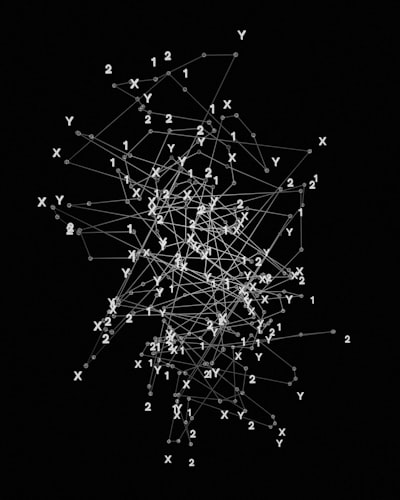
When we talk about spatio-temporal forecasting, recent literature points to the need to deal with correlations between multiple variables explicitly. Traditional approaches, such as vector autoregressive models, fall short in the face of high dimensionality and nonlinearities. This is where hybrid architectures such as CNN-LSTM offer an elegant solution: convolutional layers capture local spatial patterns—for example, the influence of a neighboring city on temperature—while recurrent networks model long-term temporal dependencies. Adding a Gaussian copula allows estimating the dependency structure between variables, which is crucial for generating coherent multivariate predictions. The result is a system that not only says 'it will rain 10 mm', but also states 'with an 80% probability, the precipitation will be between 7 and 13 mm'.
This ability to associate uncertainty with each prediction is especially valuable in business and government environments where decisions are made at risk. For example, an insurance company that uses artificial intelligence to model climate risks can adjust its premiums more accurately if it knows the confidence intervals. Similarly, a grid operator managing renewable generation can better plan storage if it has forecasts with error bands. In this context, tailor-made software development becomes a necessity: generic solutions are rarely adapted to the particularities of each domain, whether hydrology, precision agriculture or urban logistics. Companies like Q2BSTUDIO specialize in building platforms that integrate these advanced models, offering bespoke applications ranging from data pipeline to interactive visualization.
The practical implementation of a spatio-temporal forecasting system requires a robust infrastructure. On the one hand, the volume of satellite or sensor data can be massive, so the use of AWS and Azure cloud services is almost mandatory to scale processing and storage. In addition, orchestrating deep learning models demands distributed training environments and real-time inference services. Q2BSTUDIO has experience migrating and optimizing workloads in the cloud, ensuring models run with low latency and high availability. On the other hand, cybersecurity cannot be a late addition: when handling sensitive data, such as energy consumption patterns or precise geographical locations, it is necessary to implement access controls, encryption, and monitoring. The cybersecurity solutions offered by the company, including penetration testing, help shield these systems against possible attacks.
However, the true value of a forecast is not only in the model, but in how it is integrated into business processes. This is where business intelligence service tools such as Power BI come into play. Once the TSCoNet model (or any other) generates predictions with uncertainty, it is possible to create interactive dashboards that allow analysts to explore scenarios, filter by regions or periods, and make informed decisions. Q2BSTUDIO develops custom dashboards that connect directly to model outputs, facilitating adoption by non-technical teams. It is even possible to incorporate AI agents that, using natural language, answer questions such as 'what is the probability that the temperature will exceed 35 °C next month in the southern zone?' based on the confidence intervals generated.
From a technical perspective, the combination of CNN-LSTM with copulations is not trivial. Training in two stages—first optimizing the mean and then the variance—avoids point accuracy degradation, a common problem in maximum-likelihood models. In addition, subsequent recalibration ensures that the confidence intervals are empirically correct. This approach has proven to be effective in both simulated data and real records of precipitation and temperature from cities around the world. AI for business is no longer just a promise: it is available to be integrated into decision support systems. Q2BSTUDIO, with its expertise in artificial intelligence, helps organizations make the leap from academic prototypes to productive solutions, adapting architectures such as TSCoNet to their specific needs.
In conclusion, spatio-temporal forecasting with uncertainty represents a significant advance in applied data science. It is no longer enough to predict the expected value; Companies need to understand the range of possibilities for managing risk. Models such as those based on CNN-LSTM and copulas offer a viable path, but their implementation requires a comprehensive approach that spans from cloud infrastructure to visualization of results. If your organization is looking to take this step, consider custom application development to be the key to capturing the full potential of these techniques. Q2BSTUDIO can accompany you at every stage, from data architecture design to the production of intelligent agents, including cybersecurity and integration with Power BI. The future of prediction is not only more accurate, but also more transparent and actionable.