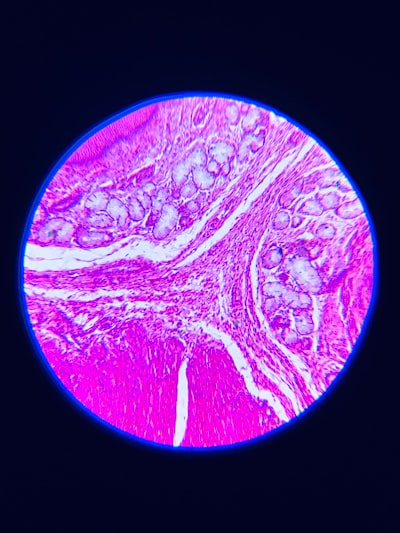
The analysis of pathological images has undergone a quiet revolution thanks to advances in artificial intelligence. The ability to extract subtle morphological patterns from tissue samples is crucial for accurate diagnoses in oncology, neurology, and other specialties. However, traditional machine learning methods, even those based on deep learning, often face a lack of labeled data and the enormous variability of Whole Slide (WSI) images. This is where self-supervised learning comes in, a branch of artificial intelligence that allows models to learn useful representations without the need for extensive human annotations. Recently, an approach called Tiny Vision Transformer with Pathology-Aware Prototype Distillation (TVT-PAPD) has shown promising results in the classification of gliomas, but beyond the specific method, what is relevant is the paradigm shift it represents for digital pathology.
TVT-PAPD's proposal combines a lightweight visual transformer with a bank of learnable pathological prototypes. Rather than simply extracting generic features, the model discovers and preserves morphological patterns representative of specific tissues, such as areas of necrosis, vascular proliferation, or cellular atypia. This allows pathologically similar regions to learn consistent representations. The result is a classifier that not only distinguishes between glioblastoma and low-grade glioma with high accuracy (F1-score greater than 90%), but also generalizes well among independent cohorts. This type of advancement is especially valuable in clinical settings where data comes from multiple different scanning centers and machines.
To understand the impact, it is worth reflecting on how health technology companies can embrace these innovations. It's not just about replicating a model, but about integrating it into robust platforms that manage the entire data cycle: from image acquisition to inference and reporting. This is where services like ai for business offered by Q2BSTUDIO make a difference. A company specializing in custom software development can adapt cutting-edge architectures such as vision transformers to the specific needs of a pathology laboratory, ensuring scalability, security, and regulatory compliance.
The implementation process is not trivial. It requires powerful cloud infrastructure to train models with millions of parameters (in this case 90M), as well as optimized data pipelines. AWS and Azure cloud services provide the flexibility to handle large volumes of WSIs images without overwhelming on-premises resources. In addition, cybersecurity is a fundamental pillar when handling patient data, so any solution must include encryption, access control and regular audits. At Q2BSTUDIO we offer cybersecurity as an integral part of our projects, ensuring that sensitive data is protected at all times.
Another key aspect is interpretability. Transformer-based classifiers may be black boxes, but by incorporating pathological prototypes, the TVT-PAPD model makes it possible to visualize which regions of the tissue are driving each decision. This is essential to gaining the trust of pathologists, who need to understand the reasoning behind a classification. Custom AI applications must prioritize transparency and integration with existing clinical workflows. For example, a system could display heat maps over the original image highlighting areas with a high probability of malignancy, making it easier for humans to review.
From a broader perspective, the self-supervised classification of pathological images opens the door to numerous applications: early detection of cancer, grading of tumors, identification of biomarkers, or even prediction of response to treatments. Each of these tasks requires adapted models and in-depth domain knowledge. This is where collaboration with experts in custom software development becomes indispensable. Q2BSTUDIO has a multidisciplinary team capable of designing end-to-end solutions, from data collection to the implementation of AI agents that automate repetitive tasks.
Automating processes using artificial intelligence not only improves diagnostic accuracy, but also frees up valuable time for healthcare professionals. Instead of reviewing hundreds of fields manually, a TVT-PAPD-based system can pre-sort samples and alert on urgent cases. In addition, integration with business intelligence tools such as Power BI allows you to visualize model performance metrics, case trends, and other key indicators, facilitating strategic decision-making in the lab. The business intelligence services we offer help turn raw data into actionable insights.
Finally, it is worth noting that the methodology presented (self-supervised learning with prototype distillation) is not limited to brain pathology. It can spread to other types of cancer and other medical imaging modalities, such as mammograms or retinograms. The key is the ability to discover representative patterns of disease without the need for expensive labels. Companies that invest in this type of technology today will be better positioned to lead the next generation of AI-assisted diagnostics. If your organization is looking to develop a similar solution, at Q2BSTUDIO we are ready to accompany you, combining expertise in artificial intelligence, cloud computing and custom software development.